
Conference Presentation
"Morning Sleep … Drives a Person from the World" (Mishnah Avot 3:10): Aspects of Sleep and Sleeping in Jewish Society throughout the Ages
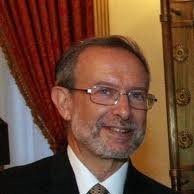
Prof. Joshua Schwartz
Professor Emeritus of Historical Geography of Ancient Israel
Department of Land of Israel Studies and Archaeology
Bar-Ilan University
Israel
Presentation Date & Time
8 November 2026
16:00 CET (Serbia time)
Conference
New Discoveries and New Directions in Biblical, Hebrew, and Theological Studies
European Hebrew Journal International Online Conference
Format
Live online via Zoom
Sign Up for Conference Updates by Email
By signing up, you will receive:
- • announcements of newly confirmed international speakers
- • newly announced presentation topics
- • important programme updates and conference news
- • Early Bird reminders before ticket prices increase
- • important registration information and deadlines
- • once a month, a carefully selected digest of important new scientific discoveries and research developments in 2026, especially in Biblical Studies, Hebrew, archaeology, ancient history, Jewish Studies, theology, linguistics, manuscripts, and related fields
Thank you for signing up!
Check your email for updates on new speakers, presentation topics, and conference news.
Something went wrong
Please try again or contact us if the problem persists.
Abstract
Everyone needs to sleep—but how much? Was there a distinctively Jewish way to sleep? Maimonides, for instance, suggested that a healthy sleep regimen, enabling one to serve God more effectively, required eight hours of sleep. Others considered this excessive and a waste of time that could be better devoted to religious or other pursuits. Some maintained that a person should sleep only the minimum necessary to function—no more, allegedly, than a horse—since sleep was regarded as an individual matter. Excessive sleep was also portrayed as a defining characteristic of the lazy, who toss and turn in bed and refuse to rise even when danger or personal advantage would counsel otherwise.
This study examines Jewish attitudes toward sleep, especially in relation to law and custom, and asks whether such practices were connected to apparently external factors: the location of the sleeping area within the home; the level of noise outside the home; and the organisation and planning of towns and cities. More broadly, it considers whether the pre-modern Jewish and non-Jewish worlds were sleep-friendly or anti-sleep environments.
Keywords
Author-provided keywords
Related Research Themes
- • sleeping practices
- • Jewish society
- • Jewish law
- • Jewish custom
- • Mishnah Avot
- • Maimonides
- • daily life
- • material culture
- • domestic space
- • urban planning
- • soundscape and noise
- • pre-modern Jewish history
- • Roman-Byzantine Palestine
- • social history of sleep
Speaker Biography
Prof. Joshua J. Schwartz is Professor Emeritus of Historical Geography of Ancient Israel in the Department of Land of Israel Studies and Archaeology at Bar-Ilan University, Israel. He received a BA in Jewish Studies and a BS in Jewish History and Jewish Philosophy from Yeshiva University in 1974, an MA in the History of the Jewish People from the Hebrew University of Jerusalem in 1977, and a Ph.D. in the History of the Jewish People from the Hebrew University of Jerusalem in 1981.
He joined Bar-Ilan University's Department of Land of Israel Studies and Archaeology in 1979 and was promoted to Full Professor in 1996. During his academic career, he has served as Chair of the Department of Land of Israel Studies and Archaeology, Coordinator of the Dr. Simon Krauthammer Chair in Archaeology, Dean of the Faculty of Jewish Studies, Director of the Ingeborg Rennert Center for Jerusalem Studies, and Director of the Center for Basic Jewish Studies.
His principal research interests include the Land of Israel during the Second Temple, Mishnah, and Talmud periods; the history of Jerusalem; the material culture of the Land of Israel in antiquity; Jewish and Christian society in Roman-Byzantine Palestine; daily life; historical geography; and the relationship between literary sources and material culture.
Research Areas
- • Historical geography of ancient Israel
- • The Land of Israel in the Second Temple period
- • Jewish society in the Mishnah and Talmud periods
- • Jerusalem studies
- • Ancient Jewish daily life
- • Material culture in the Land of Israel
- • Jewish-Christian relations in antiquity
- • Christian settlement in Roman-Byzantine Palestine
- • Social and cultural history
- • Archaeology and literary sources
Selected Books and Edited Volumes
Schwartz, Joshua.
Jews and Christians in Roman-Byzantine Palestine: History, Daily Life and Material Culture.
Vols. 1–2. Peter Lang, 2018.
Schwartz, Joshua, Avraham Faust, and Eyal Baruch, eds.
Jerusalem: From Its Beginning to the Ottoman Conquest.
Ingeborg Rennert Center for Jerusalem Studies, 2017.
Schwartz, Joshua, and Peter J. Tomson, eds.
Jews and Christians in the First and Second Centuries: The Interbellum, 70–132 CE.
Brill, 2018.
Schwartz, Joshua, Ronny Reich, and Isaiah Gafni, eds.
The History of Jerusalem: The Second Temple Period, 332 BCE–70 CE.
Vol. 1, History, Society and Cult; Vol. 2, The Material Culture. Yad Izhak Ben-Zvi, 2020.
den Dulk, Matthijs, Joshua Schwartz, Peter J. Tomson, and Joseph Verheyden, eds.
Jews and Christians in the First and Second Centuries: Mapping the Second Century.
Brill, 2024.
Academic Profiles
Suggested Citation
Schwartz, Joshua. "Morning Sleep … Drives a Person from the World" (Mishnah Avot 3:10): Aspects of Sleep and Sleeping in Jewish Society throughout the Ages. Conference presentation abstract, New Discoveries and New Directions in Biblical, Hebrew, and Theological Studies, European Hebrew Journal International Online Conference, 8 November 2026.
Attend Prof. Joshua Schwartz's Presentation
Register for the European Hebrew Journal International Online Conference to attend the live presentation and receive twelve months of access to the complete conference recording library.