Conference Presentation
"The Model Proposes, the Scholar Disposes: Building Trustworthy AI Instruments for Biblical and Hebrew Studies"
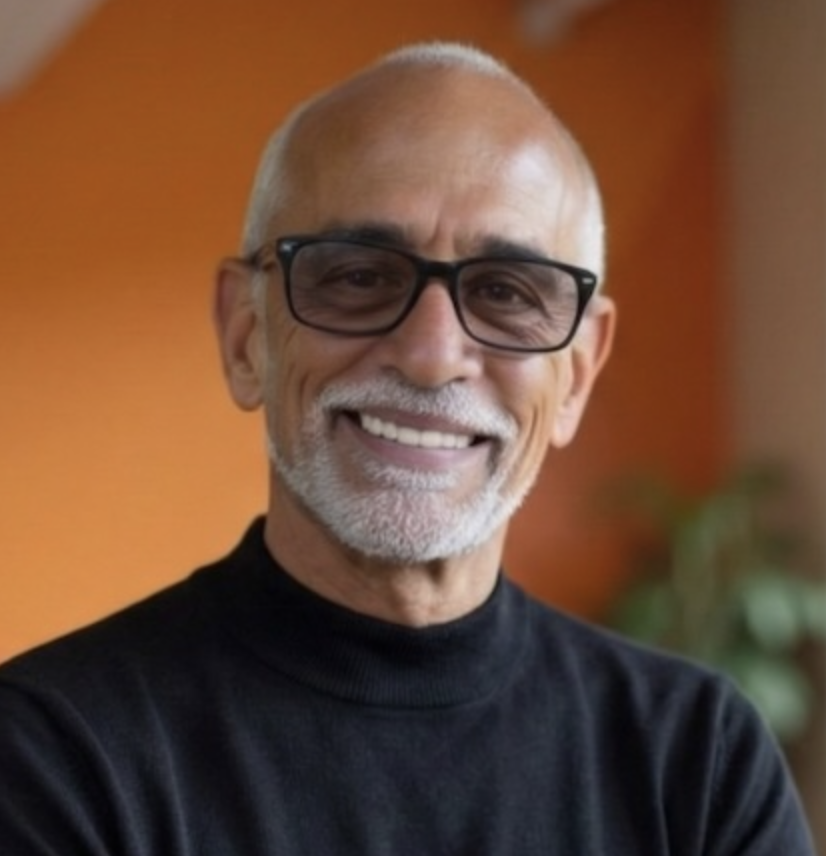
Jossi Fresco Benaim
Independent Researcher · Software Builder
Digital Humanities · Semitic Philology · Artificial Intelligence for Biblical Studies
Madrid, Spain
Presentation Date & Time
Sunday, 8 November 2026
13:00 CET (Serbia time)
Conference
New Discoveries and New Directions in Biblical, Hebrew, and Theological Studies
European Hebrew Journal International Online Conference
Format
Live online via Zoom
Sign Up for Conference Updates by Email
By signing up, you will receive:
- • announcements of newly confirmed international speakers
- • newly announced presentation topics
- • important programme updates and conference news
- • Early Bird reminders before ticket prices increase
- • important registration information and deadlines
- • once a month, a carefully selected digest of important new scientific discoveries and research developments in 2026, especially in Biblical Studies, Hebrew, archaeology, ancient history, Jewish Studies, theology, linguistics, manuscripts, and related fields
Thank you for signing up!
Check your email for updates on new speakers, presentation topics, and conference news.
Something went wrong
Please try again or contact us if the problem persists.
Abstract
Large language models can already read Hebrew, Greek, Aramaic, Syriac, and Latin, but a model that answers questions is not yet an instrument that serves scholarship. This presentation reports on five interoperating open tools, BibCrit, SHEBANQ MCP, Peshitta Constellations, the Aramaic Root Atlas, and the Polyglot Concordance, that place the LLM at deliberately different points in the philological workflow: as data filter, hypothesis generator, query translator, grounded interpreter, and draft author. Across all five, three architectural invariants preserve scholarly authorship: deterministic verification surrounds every model output; machine-enforced provenance distinguishes corpus fact from model claim; and limitations, including measured cross-run instability, are published rather than hidden. Live demonstrations over the Masoretic Text, Septuagint, Qumran scrolls, Peshitta, and Targumic corpora will show what can responsibly be offloaded to models today and what cannot. The presentation closes with an argument for strong, durable partnerships between scholars and builders: each of these instruments became trustworthy only where expert correction flowed back into it. In an age of capable frontier models the field's scarcest resource, expert judgment, becomes more valuable, not less.
About Jossi Fresco Benaim
Jossi Fresco Benaim is an independent researcher and software builder working at the intersection of the digital humanities and Semitic philology. After a successful career as a technology executive and entrepreneur, he now explores the application of AI across different areas of human knowledge. Over the past year he has built and released five open research tools for biblical and Hebrew studies, BibCrit, SHEBANQ MCP, Peshitta Constellations, the Aramaic Root Atlas, and the Polyglot Concordance, all freely accessible in the browser, published with DOIs on Zenodo, and documented with open APIs. His work focuses on how large language models can be embedded in rigorously verifiable architectures that keep the scholar, not the model, as the author of record.
Projects & Digital Tools
An interactive platform for biblical textual criticism combining critical editions, variant readings, and transparent AI-assisted analysis.
Computational analysis of the Peshitta (Syriac Bible) for cross-linguistic and textual comparison.
An interactive tool for exploring Aramaic lexical roots, morphology, and semantic relationships.
Computational tools for biblical text research and analysis based on the SHEBANQ platform.
Cross-linguistic concordance tools for biblical texts in multiple languages and versions.
Research Expertise
- • Digital Humanities
- • Semitic Philology
- • Artificial Intelligence for Biblical Studies
- • Biblical Textual Criticism
- • Computational Linguistics
- • Aramaic Language & Literature
- • Machine Learning Applications
- • Computational Text Analysis
- • Cross-corpus Language Research
- • Transparent AI in Scholarship
- • Software Development
- • Open-source Academic Tools
Academic Profile & Links
ORCID
Personal Website
Keywords
large language models; biblical textual criticism; Hebrew Bible; computational philology; Aramaic and Syriac corpora; digital humanities; scholarly provenance; open science
Suggested Citation
Fresco Benaim, Jossi. "The Model Proposes, the Scholar Disposes: Building Trustworthy AI Instruments for Biblical and Hebrew Studies." Invited presentation at New Discoveries and New Directions in Biblical, Hebrew, and Theological Studies, European Hebrew Journal International Online Conference, 8 November 2026.
Attend This Presentation
Register for the European Hebrew Journal International Online Conference to attend the live presentation and receive twelve months of access to the complete conference recording library.