Joint Presentation
Recovery of Lost Pages of Codex H
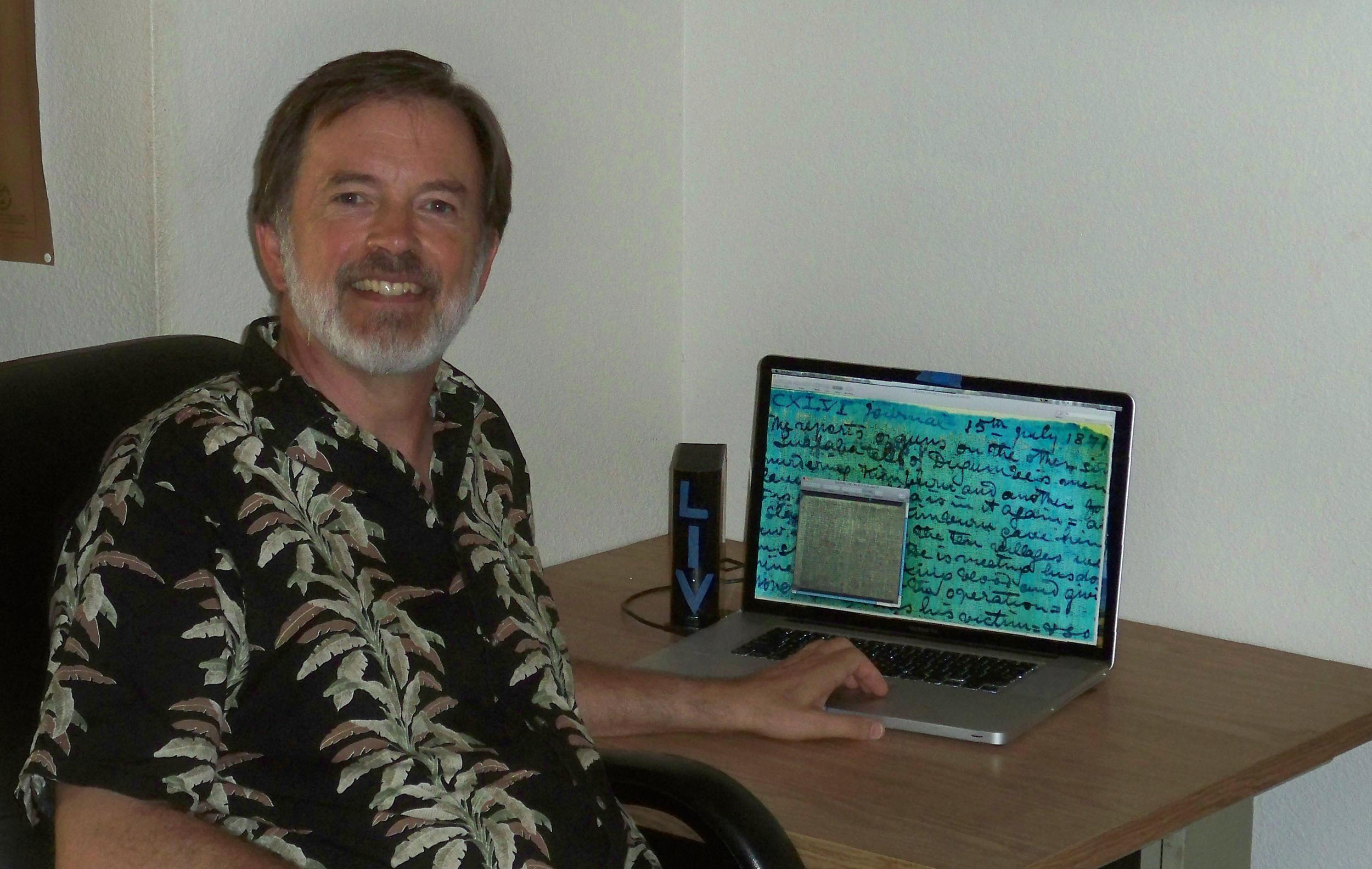
Dr. Keith T. Knox
Independent Imaging Scientist
Chief Scientific Advisor
Early Manuscripts Electronic Library (EMEL)
USA

Michael Phelps
Executive Director
Chair, Board of Directors
Early Manuscripts Electronic Library (EMEL)
USA
Presentation Date & Time
Tuesday, 10 November 2026
20:00 CET (Serbia time)
Conference
New Discoveries and New Directions in Biblical, Hebrew, and Theological Studies
European Hebrew Journal International Online Conference
Format
Live online via Zoom
Sign Up for Conference Updates by Email
By signing up, you will receive:
- • announcements of newly confirmed international speakers
- • newly announced presentation topics
- • important programme updates and conference news
- • Early Bird reminders before ticket prices increase
- • important registration information and deadlines
- • once a month, a carefully selected digest of important new scientific discoveries and research developments in 2026, especially in Biblical Studies, Hebrew, archaeology, ancient history, Jewish Studies, theology, linguistics, manuscripts, and related fields
Thank you for signing up!
Check your email for updates on new speakers, presentation topics, and conference news.
Something went wrong
Please try again or contact us if the problem persists.
Abstract
The recovery of writings that have been erased or damaged provides scholars a view into the thoughts and perspectives of ancient times that would otherwise be lost. The Early Manuscripts Electronic Library (EMEL) is a non-profit organization that is dedicated to developing and applying modern scientific imaging technologies to recover erased illegible information from historical sources, especially ancient and medieval manuscripts.
Starting in 2023, the EMEL team traveled to libraries in Turin, Verona, and Paris to image several individual pages of Codex H, GA 015. A state-of-the-art multispectral imaging system was used to capture the response of the inks and the parchment to 19 different wavelengths of light from the ultraviolet to the infrared. In this way, very faint details of the pages that were invisible to the eye were captured by the camera and recorded in the image sets.
Codex H is only known from a small set of images that have been recovered from flyleaves of other manuscripts. In analyzing the image data from the multispectral images of the known existing pages, EMEL was able to find traces of other pages of Codex H that are not known to exist. After extensive processing of the image sets of 82 existing pages, 42 additional pages of Codex H were recovered. In addition, portions of the existing pages were enhanced to recover writings that were illegible. The software that recovered these writings, Hoku, was developed by Keith Knox, is freely available for anyone to use, and is available for download at the EMEL website.
Keywords
Where Imaging Science Meets New Testament Manuscript Research
Dr. Keith T. Knox and Michael Phelps bring together advanced image processing, multispectral imaging, manuscript digitization, and the large-scale recovery of damaged, erased, and otherwise inaccessible historical texts. Their work with the Early Manuscripts Electronic Library (EMEL) forms part of an international effort to use scientific imaging and digital technologies to recover information from some of the world's most important manuscripts while making these materials accessible for scholarly study.
Their joint EHJ 2026 presentation focuses on the recovery of lost writing from Codex H (GA 015) and related manuscript research. Codex H is a sixth-century Greek manuscript of the Pauline Epistles whose unusual history, physical fragmentation, and surviving traces of lost text make it an exceptional case study in the intersection of New Testament textual scholarship and modern imaging science.
About the Presentation
What happens when pages of an ancient manuscript have physically disappeared, but microscopic traces of their writing remain on the pages that once faced them?
Codex H (GA 015) is a partially preserved sixth-century Greek manuscript of Paul's Letters and is probably the earliest surviving witness to the Euthalian tradition of organizing and annotating the Pauline Epistles. The manuscript had a complex post-production history. Its text was re-inked, the codex was eventually disassembled at the Great Lavra Monastery on Mount Athos, and leaves were reused as flyleaves and binding material in other medieval manuscripts. Surviving folios eventually became dispersed among collections in several countries.
In 2023, the Early Manuscripts Electronic Library created new multispectral images of most of the surviving material. Scientific image processing made it possible to enhance extremely faint ink-transfer or "ghost" traces left when facing manuscript pages came into contact with one another. These traces preserve information from pages that no longer physically survive.
The recent Codex H research project reports the recovery of text corresponding to 42 lost pages. Twenty of these pages contained material that had never previously been transcribed, while multispectral imaging also substantially improved the reconstruction of twenty-two previously known transfer pages.
The recovered material contributes to the digital reconstruction of Codex H as it existed before its disassembly and provides new evidence for its textual structure, palaeography, scribal practices, date, physical history, and place in the transmission of the New Testament.
The project is especially significant because Codex H preserves early evidence for the Euthalian apparatus associated with the Pauline Epistles, including systems of textual organization that differ considerably from modern chapter divisions. Its colophon also connects the manuscript tradition with Pamphilus and the Library of Caesarea.
Knox and Phelps's presentation places this work within the broader field of scientific manuscript recovery, where multispectral imaging and advanced image processing can reveal writing that is erased, damaged, obscured, transferred, or otherwise inaccessible to normal photography and the human eye.
About Dr. Keith T. Knox
Dr. Keith T. Knox is an independent imaging scientist and Chief Scientific Advisor to the Early Manuscripts Electronic Library (EMEL). His work focuses on digital image processing, spectral and multispectral imaging, image enhancement, and the recovery of writing from erased, damaged, faded, and otherwise difficult-to-read historical documents.
Knox earned a B.S. in Electrical Engineering and a Ph.D. in Optics from the University of Rochester. His earlier scientific career included many years in advanced digital imaging research at Xerox, and his broader work in imaging science extends from astronomical image reconstruction to cultural-heritage imaging.
He has played an important role in the development and application of imaging and image-processing methods used on major manuscript projects, including the Archimedes Palimpsest, the Syriac-Galen Palimpsest, the Sinai Palimpsests, and other historical documents and manuscripts. In the Archimedes Palimpsest project, advanced processing of multispectral data was central to making otherwise inaccessible undertext legible.
Knox is also the creator of Hoku, EMEL's freely distributed image-processing software for multispectral datasets. Hoku is designed specifically to enhance details and recover writing from damaged or erased manuscripts and other historical materials. The software continues to be actively developed.
His recent research includes methodological work on image-processing techniques for revealing erased handwriting and the continuing development of computational approaches for extracting information from spectral manuscript data.
Research Expertise — Dr. Keith T. Knox
- • Multispectral Imaging
- • Spectral Image Processing
- • Digital Image Processing
- • Image Enhancement and Restoration
- • Recovery of Erased and Damaged Writing
- • Palimpsest Imaging
- • Ancient Manuscript Imaging
- • Cultural Heritage Imaging
- • Digital Humanities
- • Scientific Imaging
- • Manuscript Digitization
- • Spectral Data Analysis
- • Hoku Image-Processing Software
- • Archimedes Palimpsest
- • Syriac-Galen Palimpsest
- • Sinai Palimpsests
Selected Publications and Research — Dr. Keith T. Knox
Knox, Keith T.
"Image Processing Methods that Reveal Erased Handwriting: Developments of the Last Two Decades."
In New Light on Old Manuscripts: The Sinai Palimpsests and Other Advances in Palimpsest Studies, 2023, pp. 395–406.
Easton, Roger L., Jr., Keith T. Knox, William A. Christens-Barry, and Ken Boydston.
"Spectral Imaging Methods Applied to the Syriac-Galen Palimpsest."
Manuscript Studies 3.1 (2018): 69–82.
Easton, Roger L., William A. Christens-Barry, and Keith T. Knox.
"Ten Years of Lessons from Imaging of the Archimedes Palimpsest."
Commentationes Humanarum Litterarum 129 (2011): 5–34.
Easton, Roger L., William A. Christens-Barry, and Keith T. Knox.
"Imaging and Image-Processing Techniques."
In The Archimedes Palimpsest, Volume I: Catalogue and Commentary, edited by William Noel. Cambridge University Press, 2011.
Knox, Keith T., et al.
"Recovery of Handwritten Text from the Diaries and Papers of David Livingstone."
Proceedings of IS&T/SPIE Electronic Imaging, 2011.
About Michael Phelps
Michael Phelps is Executive Director of the Early Manuscripts Electronic Library (EMEL) and Chair of its Board of Directors. EMEL is a United States nonprofit research and service organization dedicated to making important and often inaccessible cultural-heritage materials available for scholarly study through advanced scientific imaging, digitization, technological innovation, and responsible access.
Phelps has directed and coordinated major international manuscript-imaging and digitization initiatives involving scientists, textual scholars, conservators, libraries, monasteries, museums, and universities. He served as Director of the Sinai Palimpsests Project, a collaboration involving St. Catherine's Monastery of the Sinai, EMEL, UCLA Library, and an international scholarly and scientific team.
The Sinai Palimpsests Project became one of the largest systematic applications of spectral imaging to manuscript palimpsests, producing multispectral data for thousands of pages and enabling scholars to study erased texts preserved beneath later writing.
Phelps has also participated in projects involving the Jubilees Palimpsest, ancient biblical manuscripts, the digitization of the manuscript library of St. Catherine's Monastery, and numerous other cultural-heritage imaging initiatives. Earlier in his career, he served as Director of the Ancient Biblical Manuscript Center in Claremont, California.
He is directly connected with the recent Codex H research through EMEL's multispectral imaging work and is a contributor to the published Codex H (GA 015) multispectral-image dataset deposited by the University of Glasgow.
His work combines project direction, manuscript documentation, scholarly access, spectral-imaging workflows, preservation, and the coordination of international research teams working with fragile and historically significant source materials.
Research and Professional Expertise — Michael Phelps
- • Ancient Manuscripts
- • Biblical Manuscripts
- • Manuscript Digitization
- • Multispectral Imaging Projects
- • Spectral Imaging
- • Palimpsest Studies
- • Cultural Heritage Digitization
- • Digital Humanities
- • Scientific Manuscript Documentation
- • Project Direction
- • International Research Collaboration
- • Responsible Access to Cultural Heritage
- • Sinai Palimpsests Project
- • St. Catherine's Monastery Manuscripts
- • Codex H (GA 015)
- • Digital Preservation
Selected Publications and Research — Michael Phelps
Allen, Garrick V., Kimberley Fowler, and Michael Phelps.
Codex H (GA 015) Multispectral Images.
University of Glasgow Research Data, 2025.
Phelps, Michael B.
"The Sinai Palimpsests Project (2011–2016): Goals, Methods, and Contributions."
In New Light on Old Manuscripts: The Sinai Palimpsests and Other Advances in Palimpsest Studies, 2023, pp. 31–38.
Phelps, Michael.
"The Sinai Palimpsests Project and the Recovery of Latin Undertexts in Arabic NF 8."
In The Early Illustrated Apollonius of Tyre: Studies of a Sinai Palimpsest, edited by Michelle P. Brown and Jessica J. Lockhart, 2025.
Rapp, Claudia, and Michael Phelps.
"The Sinai Palimpsests Project."
Sinaiticus: The Bulletin of the Saint Catherine Foundation, 2017, pp. 18–20.
Reed, Stephen A.
The Dead Sea Scrolls Catalogue: Documents, Photographs and Museum Inventory Numbers.
Revised and edited by Marilyn J. Lundberg with the collaboration of Michael Phelps. Ancient Biblical Manuscript Center / Scholars Press, 1994.
Early Manuscripts Electronic Library (EMEL)
The Early Manuscripts Electronic Library (EMEL) is a nonprofit research and service organization dedicated to preserving cultural heritage and overcoming geographical, political, cultural, and technological barriers to scholarly access. EMEL develops and participates in advanced scientific-imaging and digitization projects with libraries, museums, monasteries, universities, scientists, and scholars around the world.
Its projects include the Sinai Palimpsests Project, the Sinai Library Digitization Project, Codex H (GA 015), the Codex Zacynthius Spectral Imaging Project, the Jubilees Palimpsest, the Enoch Palimpsest, the Martellus Map, the Codex Climaci Rescriptus, and other major cultural-heritage imaging initiatives.
Learn more at https://www.emelibrary.org/
Attend This Joint Presentation
Register for the European Hebrew Journal International Online Conference to attend the live presentation and receive twelve months of access to the complete conference recording library.