Special Extended Joint Presentation
El-Araj / Bethsaida: New Discoveries from the 2026 Excavation Season
Latest Archaeological Evidence, Historical Geography, and the Continuing Search for Bethsaida-Julias
The Latest Results from Season 10 of the El-Araj Excavation Project and Their Significance for the Identification of Ancient Bethsaida

Prof. R. Steven Notley
Professor and Dean of Religious Studies
Pillar College
Newark, New Jersey
United States
Academic Director: El-Araj Excavation Project
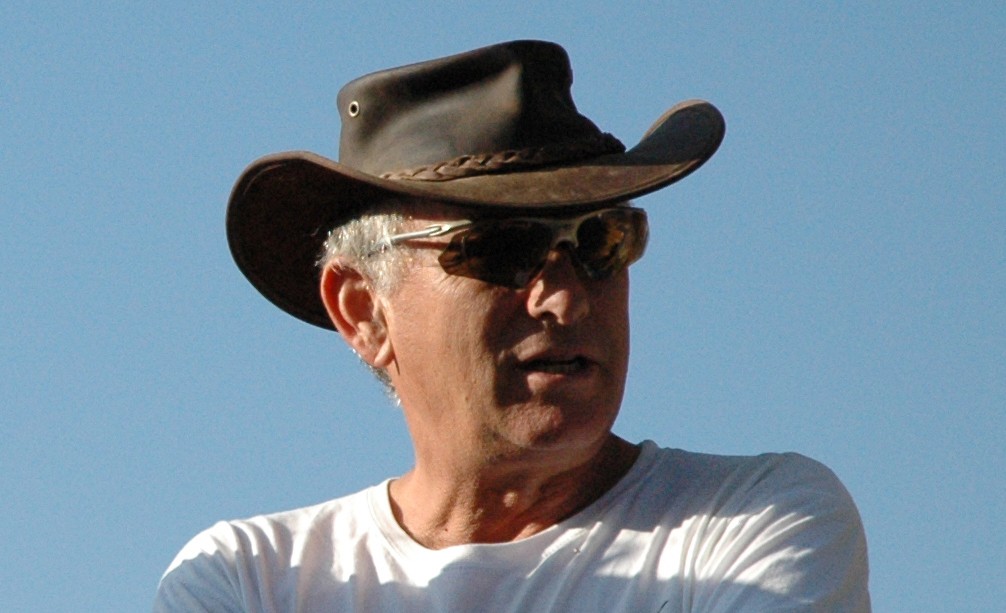
Prof. Mordechai Aviam
Director / Academic Head
Kinneret Institute for Galilean Archaeology
Land of Israel Studies
Kinneret Academic College
Israel
Presentation Date & Time
Saturday, 7 November 2026
23:00 CET (Serbia time)
17:00 EST (New York)
Conference
New Discoveries and New Directions in Biblical, Hebrew, and Theological Studies
European Hebrew Journal International Online Conference
Session Format
Special Extended Joint Session — approximately 90–120 minutes
Live online via Zoom
Sign Up for Conference Updates by Email
By signing up, you will receive:
- • announcements of newly confirmed international speakers
- • newly announced presentation topics
- • important programme updates and conference news
- • Late Registration deadline reminders
- • important registration information and deadlines
- • once a month, a carefully selected digest of important new scientific discoveries and research developments in 2026, especially in Biblical Studies, Hebrew, archaeology, ancient history, Jewish Studies, theology, linguistics, manuscripts, and related fields
Thank you for signing up!
Check your email for updates on new speakers, presentation topics, and conference news.
Something went wrong
Please try again or contact us if the problem persists.
The 2026 Excavation Season and Latest Discoveries
This special extended joint session presents the latest results and newly emerging archaeological evidence from the 2026 excavation season at El-Araj. Prof. R. Steven Notley will place the site within the historical geography of Bethsaida-Julias and the relevant ancient textual and geographical evidence, while Prof. Mordechai Aviam will present the archaeological results of the 2026 field season, including the most recent material evidence and its significance for the continuing scholarly discussion concerning the identification of El-Araj with ancient Bethsaida.
The 2026 season has produced new Roman-period evidence and additional archaeological data relevant to the reconstruction of the settlement and the continuing investigation of Bethsaida-Julias. Together, their presentations offer conference participants an unusual opportunity to hear the most recent historical-geographical and archaeological evidence presented by two leading members of the excavation project in a single extended scholarly session.
About the Joint Presentation
Where was Bethsaida, the Galilean settlement associated in the New Testament with Peter, Andrew and Philip?
Since excavations began at El-Araj in 2016, archaeological discoveries at the site have contributed major new evidence to the discussion. The site contains remains from the Roman and Byzantine periods and has yielded evidence relevant to the historical identification of Bethsaida-Julias.
This special EHJ session combines two complementary approaches. R. Steven Notley will introduce the historical geography of Bethsaida, relevant ancient sources, geographical and textual evidence, and the scholarly framework within which El-Araj has emerged as an important candidate for Bethsaida-Julias. Mordechai Aviam will then present the archaeological evidence: excavation results, material culture, architecture, archaeological contexts, and recent discoveries from El-Araj. The session will conclude with an extended scholarly discussion and audience Q&A.
El-Araj, Bethsaida-Julias, and the Sea of Galilee
El-Araj (also known as Khirbet el-Araj) is an archaeological site located on the northeastern shore of the Sea of Galilee near the Jordan River. The site contains material remains from the Roman and Byzantine periods, including structures that may be associated with early Christian activity in the region.
Bethsaida (Bethsaida-Julias) was a settlement in the Galilee mentioned in the New Testament as the hometown of the apostles Peter, Andrew and Philip. Despite references to the site in ancient literary sources, including accounts by Josephus and Pliny, the precise location of ancient Bethsaida has long been a matter of scholarly debate.
The El-Araj Excavation Project, which began in 2016, has produced new archaeological evidence relevant to the identification of El-Araj with ancient Bethsaida-Julias. The site has yielded Roman-period ceramics, architectural remains, Byzantine material, and evidence from the Church of the Apostles tradition. These archaeological discoveries have made El-Araj a leading candidate in the modern scholarly discussion of Bethsaida's location.
The identification of El-Araj with ancient Bethsaida-Julias remains a matter of ongoing scholarly discussion and investigation. This EHJ session places the latest archaeological findings and historical-geographical arguments in direct conversation.
About Prof. R. Steven Notley
Prof. R. Steven Notley is Professor and Dean of Religious Studies at Pillar College in Newark, New Jersey. He is Academic Director of the El-Araj Excavation Project and has served in that role since the project began in 2016. He previously served as Distinguished Professor of New Testament and Christian Origins at the New York City campus of Nyack / Alliance University from 2001 to 2023.
Notley received his PhD from the Hebrew University of Jerusalem, where he studied with David Flusser. He lived for approximately sixteen years in Jerusalem and was founding chair of the New Testament Studies programme at Jerusalem University College.
His research brings together historical geography, ancient Judaism, New Testament studies, Christian origins, and the historical setting of the Gospels. He has published extensively on the geography of Galilee, Bethsaida, the historical Jesus, and Jewish and Christian sources. His work focuses on the relationship between ancient literary evidence and the geographical and archaeological context of first-century Galilee.
Research Expertise — Prof. R. Steven Notley
- • Historical Geography
- • New Testament
- • Christian Origins
- • Ancient Judaism
- • Second Temple Judaism
- • Galilee
- • Sea of Galilee
- • Historical Jesus Research
- • Jewish Background of Early Christianity
- • Rabbinic Literature
- • Ancient Jewish Sources
- • New Testament Geography
- • Bethsaida
- • Bethsaida-Julias
- • El-Araj
- • Archaeology and Text
About Prof. Mordechai Aviam
Prof. Mordechai Aviam (Motti Aviam) is an Israeli archaeologist specializing in the archaeology of ancient Galilee. He is Director and Academic Head of the Kinneret Institute for Galilean Archaeology at Kinneret Academic College, where he has been instrumental in developing archaeological research on the region.
Aviam has been a leading director and excavator at the El-Araj site and brings decades of experience in Galilean archaeology. His research has focused on the archaeology of Jewish settlements, synagogues, churches, and material culture in Galilee across multiple periods, including the Hellenistic, Roman, Byzantine, and early Islamic periods.
His archaeological work has included major research at sites such as Yodefat/Jotapata, Shikhin, and El-Araj. Through his publications and ongoing research, Aviam has contributed significantly to understanding the settlement patterns, religious life, and material culture of ancient Galilee and has published extensively on the region's archaeological evidence.
Research Expertise — Prof. Mordechai Aviam
- • Archaeology of Israel
- • Galilean Archaeology
- • Ancient Galilee
- • Second Temple Period
- • Hellenistic Period
- • Roman Period
- • Byzantine Period
- • Ancient Jewish Settlements
- • Jewish Villages
- • Ancient Synagogues
- • Churches and Monasteries
- • Classical Archaeology
- • Material Culture
- • Field Archaeology
- • El-Araj and Bethsaida
- • Early Christianity in Galilee
Keywords
Research keywords relevant to this joint presentation
Attend This Special Joint Presentation
Register for the European Hebrew Journal International Online Conference to attend this special extended live session on Saturday, 7 November 2026 at 23:00 CET and receive twelve months of access to the complete conference recording library.