Joint Presentation
One Lexeme at a Time
Rethinking Full Spelling as Lexical Diffusion
(A computational investigation of full spelling and orthographic variation in the Hebrew Bible)
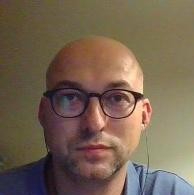
Dr. Martijn Naaijer
Guest Researcher
Section of Biblical Exegesis
Faculty of Theology
University of Copenhagen
Denmark
ORCID: 0009-0006-3325-0614
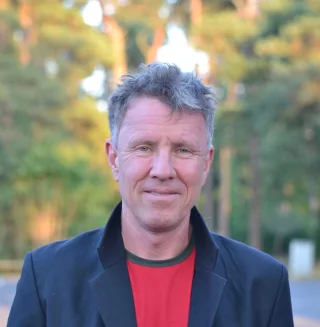
Associate Professor Martin Gustaf Ehrensvärd, PhD
Associate Professor
Section of Biblical Exegesis
Faculty of Theology
University of Copenhagen
Denmark
ORCID: 0000-0002-1468-6264
Presentation Date & Time
Saturday, 7 November 2026
15:00 CET (Serbia time)
Conference
New Discoveries and New Directions in Biblical, Hebrew, and Theological Studies
European Hebrew Journal International Online Conference
Format
Live online via Zoom
Sign Up for Conference Updates by Email
By signing up, you will receive:
- • announcements of newly confirmed international speakers
- • newly announced presentation topics
- • important programme updates and conference news
- • Early Bird reminders before ticket prices increase
- • important registration information and deadlines
- • once a month, a carefully selected digest of important new scientific discoveries and research developments in 2026, especially in Biblical Studies, Hebrew, archaeology, ancient history, Jewish Studies, theology, linguistics, manuscripts, and related fields
Thank you for signing up!
Check your email for updates on new speakers, presentation topics, and conference news.
Something went wrong
Please try again or contact us if the problem persists.
Where Biblical Hebrew Meets Computational Linguistics
Naaijer and Ehrensvärd bring together two closely connected areas of expertise: the historical and philological study of Biblical Hebrew and the computational analysis of ancient texts. Their collaboration has included research on artificial intelligence and ancient Hebrew texts, the Dead Sea Scrolls, the Samaritan Pentateuch, linguistic variation, and the methodological problems surrounding the linguistic dating of biblical literature. Their joint presentation applies this combination of traditional Hebrew philology and computational modelling to one of the most familiar assumptions in the study of Biblical Hebrew orthography: the historical significance of plene, or "full," spelling.
About the Presentation
Can the spelling of a Hebrew word really tell us when a biblical text was written?
This joint presentation challenges the traditional assumption that "full" spelling in Biblical Hebrew simply increases uniformly through time and can therefore function as a straightforward chronological marker. Instead, Naaijer and Ehrensvärd investigate whether orthographic change spreads one word at a time through the vocabulary — a process known as lexical diffusion.
Drawing on evidence from the Masoretic Text, the Samaritan Pentateuch, and the biblical Dead Sea Scrolls, and combining traditional Hebrew philology with computational analysis and hierarchical Bayesian regression, the presentation asks whether the familiar contrast between defective and full spelling is better understood as a lexically conditioned process rather than as a single chronological clock for dating biblical texts. For additional scholarly perspective, see the Institute's research on comparative textual evidence from the Masoretic Text, Samaritan Pentateuch and Dead Sea Scrolls.
Abstract
Scholarship on the matres lectionis has long treated "plene spelling" as a single quantity that increases over time, and has used that rise as an indicator for dating biblical texts. This paper argues instead that orthographic fullness advances by lexical diffusion: it spreads through the vocabulary, governed by properties of individual lexemes rather than by a single corpus-wide clock. We make the case through two complementary computational studies drawn from the Masoretic Text, the Samaritan Pentateuch, and the biblical Dead Sea Scrolls.
The first is the name דוד/דויד. In our data, it is the only lexeme in the biblical lexicon to show near-total replacement of an earlier defective variant by a later full one in the MT. Mapping its distribution across the MT and DSS reveals the shape of a diffusion process that has run to completion, and exposes how heavily conventional "late" orthographic profiles depend on this one word.
The second is diffusion in progress. Within a single syllable type (qatōl), phonologically identical words behave oppositely: גדול is often full, קטן almost always defective. Using hierarchical Bayesian regression, we test which lexeme-level factors, token frequency, morphological environment, and semantic domain, predict a word's position along the defective-to-full continuum.
Together the two cases show that spelling change in Biblical Hebrew is lexically gradient, not uniform, with consequences for any argument that treats aggregate spelling counts as evidence of a text's date.
About Dr. Martijn Naaijer
Dr. Martijn Naaijer is a Guest Researcher in the Section of Biblical Exegesis at the Faculty of Theology, University of Copenhagen. His research lies at the intersection of Biblical Hebrew linguistics, textual scholarship, corpus linguistics, statistics, and machine learning. He received his PhD from Vrije Universiteit Amsterdam in 2020 with the dissertation "Clause Structure Variation in Biblical Hebrew: A Quantitative Approach," in which he applied quantitative methods to linguistic variation in the Hebrew Bible.
From 2021 to 2024 he was a postdoctoral researcher at the University of Copenhagen, where his work brought together the study of the Dead Sea Scrolls, Biblical Hebrew, textual development, and machine-learning methods. He is currently also a postdoctoral researcher at the University of Zurich (2025–2027) in the project "Towards an Integrated Methodology of Dating Biblical Texts." His research investigates how statistical and computational approaches can contribute to questions of linguistic variation, textual transmission, historical linguistics, and the dating and development of biblical texts.
Naaijer is also involved in the creation and analysis of digitally annotated corpora of ancient Hebrew and other Semitic texts, including research on the Samaritan Pentateuch, Biblical Hebrew, Syriac, and the Dead Sea Scrolls.
Research Expertise — Dr. Martijn Naaijer
- • Biblical Hebrew
- • Hebrew Bible
- • Computational Linguistics
- • Corpus Linguistics
- • Historical Linguistics
- • Linguistic Variation
- • Linguistic Dating of Biblical Texts
- • Machine Learning
- • Artificial Intelligence and Ancient Texts
- • Dead Sea Scrolls
- • Samaritan Pentateuch
- • Textual Criticism
- • Digital Humanities
- • Ancient Semitic Languages
- • Statistical Methods in Biblical Studies
Selected Publications and Research — Dr. Martijn Naaijer
Naaijer, Martijn.
Clause Structure Variation in Biblical Hebrew: A Quantitative Approach.
PhD dissertation, Vrije Universiteit Amsterdam, 2020.
Naaijer, Martijn, and Dirk Roorda.
Syntactic Variation in Masoretic Hebrew: The Object Clause Reconsidered.
Journal for Semitics 25.2 (2016): 961–971.
Naaijer, Martijn, Christian Canu Højgaard, Stefan Schorch, and Martin Gustaf Ehrensvärd.
Text-Fabric Dataset of the Samaritan Pentateuch.
Research Data Journal for the Humanities and Social Sciences 9 (2024).
Naaijer, Martijn, and Aren Wilson-Wright.
Towards an Integrated Methodology of Dating Biblical Texts: The Case of the Book of Jeremiah.
Proceedings of the Second Workshop on Ancient Language Processing, 2025, pp. 47–52.
Cantanhêde, Saulo de Oliveira, Martijn Naaijer, Christian Canu Højgaard, and Oliver Glanz.
Identifying Phrase Boundaries in the Samaritan Pentateuch with Machine Learning.
Religions 17.2 (2026): 192.
About Associate Professor Martin Gustaf Ehrensvärd, PhD
Martin Gustaf Ehrensvärd, PhD, is Associate Professor in the Section of Biblical Exegesis at the Faculty of Theology, University of Copenhagen. He holds a PhD in Semitic Philology from Aarhus University and is a specialist in Biblical Hebrew, Semitic philology, historical linguistics, the linguistic history of Hebrew, and the methodological problems involved in using linguistic evidence to date biblical texts.
A major strand of Ehrensvärd's scholarship has challenged overly simple chronological models of Biblical Hebrew and emphasized the complexity of linguistic variation, scribal transmission, textual development, and the distinction between linguistic history and the date of individual biblical compositions. Together with Ian Young and Robert Rezetko, he co-authored the major study "Linguistic Dating of Biblical Texts."
At the University of Copenhagen, Ehrensvärd has also worked at the intersection of traditional Hebrew philology and computational research. Together with computer scientist Anders Søgaard, he has been a principal investigator in the project "Artificial Intelligence and Ancient Hebrew Texts," which uses machine-learning methods to investigate the linguistic and textual history of the Hebrew Bible and the biblical Dead Sea Scrolls.
His broader teaching and research background includes Biblical and Rabbinic Hebrew, Classical Arabic, Classical Syriac, other Aramaic dialects, Biblical translation, and the historical study of Semitic languages.
Research Expertise — Associate Professor Martin Gustaf Ehrensvärd, PhD
- • Biblical Hebrew
- • Hebrew Bible
- • Semitic Philology
- • Historical Linguistics
- • Diachronic Linguistics
- • Linguistic Dating of Biblical Texts
- • Biblical Hebrew Syntax
- • Textual History
- • Dead Sea Scrolls
- • Hebrew Language History
- • Artificial Intelligence and Ancient Hebrew Texts
- • Machine Learning in Biblical Studies
- • Biblical Translation
- • Rabbinic Hebrew
- • Classical Arabic
- • Classical Syriac and Aramaic
Selected Books and Publications — Associate Professor Martin Gustaf Ehrensvärd, PhD
Young, Ian, Robert Rezetko, and Martin Ehrensvärd.
Linguistic Dating of Biblical Texts.
London: Equinox Publishing, 2008.
Ehrensvärd, Martin.
Once Again: The Problem of Dating Biblical Hebrew.
Scandinavian Journal of the Old Testament 11.1 (1997): 29–40.
Ehrensvärd, Martin Gustaf.
Why Biblical Texts Cannot Be Dated Linguistically.
Hebrew Studies 47 (2006): 177–189.
Ehrensvärd, Martin Gustaf.
Discerning Diachronic Change in the Biblical Hebrew Verbal System.
In Diachrony in Biblical Hebrew, edited by Ziony Zevit and Cynthia Miller-Naudé. Eisenbrauns, 2012, pp. 181–192.
Naaijer, Martijn, Christian Canu Højgaard, Stefan Schorch, and Martin Gustaf Ehrensvärd.
Text-Fabric Dataset of the Samaritan Pentateuch.
Research Data Journal for the Humanities and Social Sciences 9 (2024).
Rezetko, Robert Carl, Ian Young, Martin Gustaf Ehrensvärd, and Martijn Naaijer.
Isn't It Time to Break Up with Linguistic Dating? Rethinking Hornkohl's Method—and What Comes Next.
2025.
Keywords
Author-provided and topic-related keywords
Attend This Joint Presentation
Register for the European Hebrew Journal International Online Conference to attend the live presentation and receive twelve months of access to the complete conference recording library.