
Conference Presentation
Why was the Book of Chronicles Written?
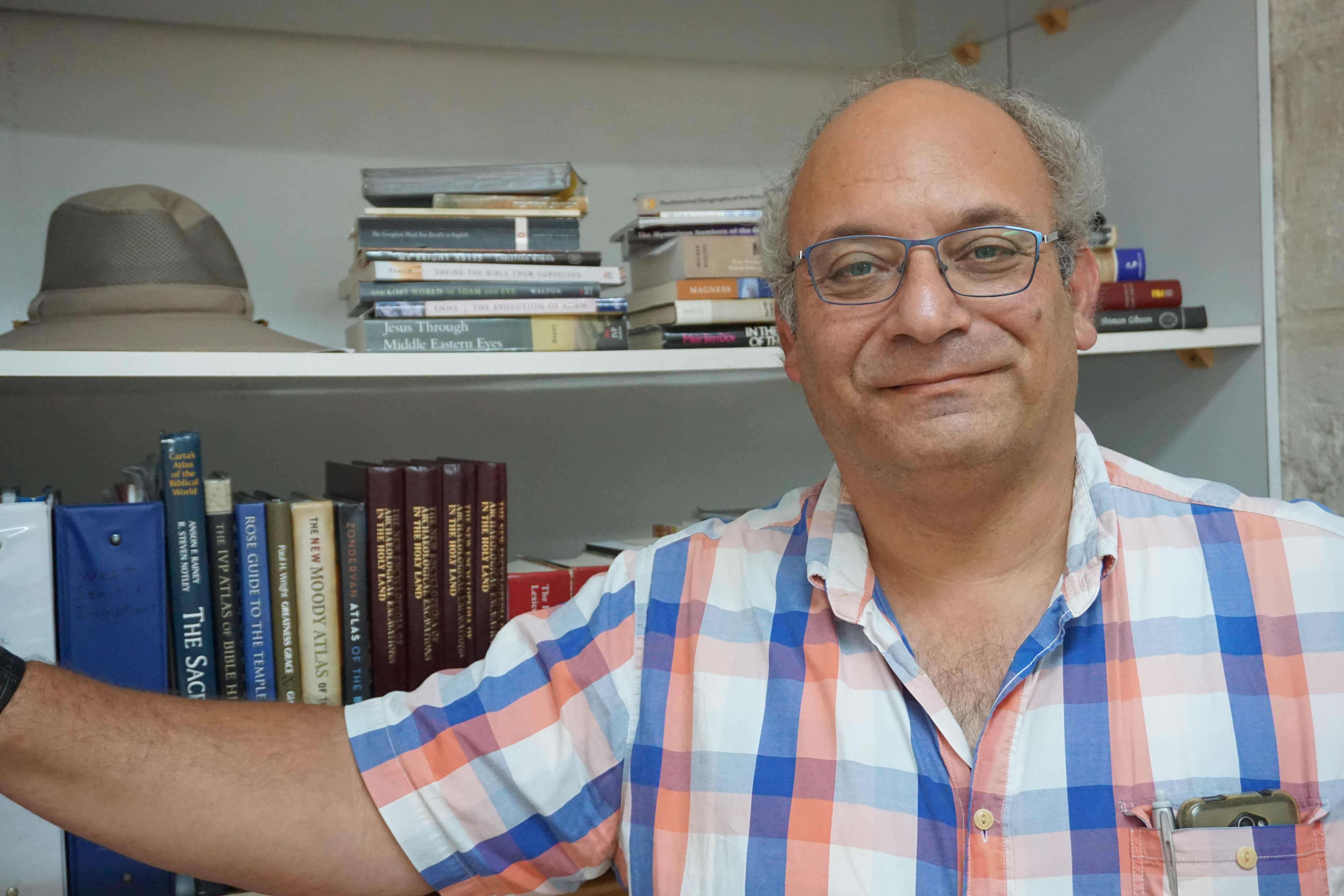
Prof. Dr. Yigal Levin
Professor of Biblical History
Chair, Israel and Golda Koschitzky Department of Jewish History and Contemporary Jewry
Bar-Ilan University
Israel
Presentation Date & Time
Sunday, 8 November 2026
17:00 CET (Serbia time)
Conference
New Discoveries and New Directions in Biblical, Hebrew, and Theological Studies
European Hebrew Journal International Online Conference
Format
Live online via Zoom
Sign Up for Conference Updates by Email
By signing up, you will receive:
- • announcements of newly confirmed international speakers
- • newly announced presentation topics
- • important programme updates and conference news
- • Early Bird reminders before ticket prices increase
- • important registration information and deadlines
- • once a month, a carefully selected digest of important new scientific discoveries and research developments in 2026, especially in Biblical Studies, Hebrew, archaeology, ancient history, Jewish Studies, theology, linguistics, manuscripts, and related fields
Thank you for signing up!
Check your email for updates on new speakers, presentation topics, and conference news.
Something went wrong
Please try again or contact us if the problem persists.
Abstract
The book of Chronicles, the final book of the Hebrew Bible in the Masoretic canon, is unique among the historiographical books of the Bible in several ways. It is longer than any other historiographical book. It "covers" the longest stretch if history, reaching from Adam to Cyrus. It utilizes several distinct literary genres, including, most famously, a nine-chapter long genealogical "introduction". And, most importantly, it covers material that had already been covered by previous biblical books, not only Samuel and Kings, but also parts of Genesis, of Joshua, of Psalms, of Ezra and others. In some cases, the Chronicler seems to have simple copied older material. In others, he seems to have reshaped it. And in yet others, he simply alluded to its existence. The question that this paper asks and attempts to answer is "why". Why did the author of Chronicles, whom we assume to have lived in the fourth century BCE, see a need to re-write earlier biblical materials, which were still known to his audience? Did he wish to replace the earlier material? To re-shape or to recontextualize it? This paper offers several suggested answers.
About Prof. Dr. Yigal Levin
Yigal Levin is Professor of Biblical History at Bar-Ilan University and Chair of the Israel and Golda Koschitzky Department of Jewish History and Contemporary Jewry. His research focuses on the history, archaeology, and historical geography of ancient Israel and the southern Levant during the biblical and early Second Temple periods, with particular attention to the relationship between the biblical text, historical sources, geography, and archaeological evidence.
His major fields of research include Biblical Israel during the Iron Age, the Persian and Hellenistic periods, the society and religion of ancient Israel, biblical historiography, historical geography, biblical toponymy, and the use of biblical genealogies as sources for reconstructing the social and geographical world of ancient Israel. His work frequently brings textual interpretation into dialogue with archaeology and the wider historical context of the Ancient Near East.
A major focus of Levin's scholarship is the Book of Chronicles. His multi-volume commentary project provides new translations together with extensive historical, geographical, archaeological, linguistic, and literary analysis of Chronicles. In 2026, Bloomsbury published his latest volume, The Chronicles of David and Solomon: 1 Chronicles 10–2 Chronicles 9: A New Translation and Commentary. For additional scholarly research on Chronicles, see the Institute's work on Yigal Levin's research on the Book of Chronicles.
Levin has also participated in archaeological fieldwork at important sites in Israel, including Tel Beth Shemesh and Tell es-Safi/Gath, and has extensive experience teaching biblical-period history, archaeology, historical geography, and related fields.
Education & Academic Background
Ph.D. — Land of Israel Studies
Bar-Ilan University
Dissertation: The Historical Geography of the Chronicler
Advisors: Prof. Anson F. Rainey, Prof. Aaron Demsky
B.A. — Land of Israel Studies and General History
Bar-Ilan University
Research Expertise
Current Scholarly Project
The Chronicles Commentary Project
Professor Levin is engaged in a major multi-volume translation and commentary project on the Book of Chronicles, combining textual interpretation with historical, geographical, archaeological, linguistic, and literary analysis.
The Chronicles of the Kings of Judah
2 Chronicles 10–36: A New Translation and Commentary
T&T Clark / Bloomsbury, 2017
The Chronicles of David and Solomon
1 Chronicles 10–2 Chronicles 9: A New Translation and Commentary
Bloomsbury, 2026
The Chronicles of All Israel
1 Chronicles 1–9
Forthcoming / planned continuation
The planned continuation focuses on the genealogies of 1 Chronicles 1–9 and is intended to complete the larger commentary project with broader consideration of the Book of Chronicles, its historical setting, methods, purposes, and meaning.
Selected Books and Publications
Levin, Yigal.
The Chronicles of David and Solomon: 1 Chronicles 10–2 Chronicles 9: A New Translation and Commentary.
Bloomsbury, 2026.
Levin, Yigal.
The Chronicles of the Kings of Judah: 2 Chronicles 10–36: A New Translation and Commentary.
T&T Clark / Bloomsbury, 2017.
Levin, Yigal, ed.
A Time of Change: Judah and its Neighbours in the Persian and Early Hellenistic Periods.
T&T Clark.
Levin, Yigal, and Amnon Shapira, eds.
War and Peace in Jewish Tradition: From the Biblical World to the Present.
Routledge, 2012.
Avioz, Michael, et al., including Yigal Levin.
Writing and Rewriting History in Ancient Israel and Near Eastern Cultures.
Selected Recent Scholarship
Levin, Yigal.
"The Role of Geography in the Genealogies of Chronicles."
In Lexham Geographic Commentary on the Historical Books, vol. 2, 2026, pp. 578–595.
Levin, Yigal.
"Samuel, Saul, and the Founding of the Monarchy: Between Historical Reality and Literary Ideology."
2025, pp. 74–89.
Levin, Yigal.
"Text and the City: The Urban Geography of Jerusalem as Depicted in Chronicles."
2025, pp. 149–167.
Levin, Yigal.
"The Administration of Idumea in the Persian and Early Hellenistic Periods."
Hebrew Bible and Ancient Israel 14.3 (2025): 397–420.
Archaeological Field Experience
- • Sumaqa, Mount Carmel — 1986–1988
- • Kefar Hanania — 1989
- • Tel Beth Shemesh — 1990–1993
- • Tell es-Safi/Gath — 2005–2008, Academic Program Director
His academic work is informed not only by biblical and historical texts but also by direct archaeological field experience in Israel.
Academic Leadership
Chair
Israel and Golda Koschitzky Department of Jewish History and Contemporary Jewry
Bar-Ilan University
Scholarly Associations
- • Society of Biblical Literature
- • Israel Association for Assyriology and Ancient Near Eastern Studies
- • Israel Exploration Society
Academic Profiles
Bar-Ilan University — Official Profile
View Research ProfileBar-Ilan University Research Portal / CRIS
View CRIS ProfileAcademia.edu
View Academia.edu ProfileKeywords
Book of Chronicles · Chronicler · Biblical Historiography · Hebrew Bible · Rewriting Scripture · Biblical Genealogies · Persian Period · Fourth Century BCE · Samuel and Kings · Reception and Recontextualization of Biblical Traditions
Suggested Citation
Levin, Yigal. "Why was the Book of Chronicles Written?" Invited presentation at New Discoveries and New Directions in Biblical, Hebrew, and Theological Studies, European Hebrew Journal International Online Conference, 8 November 2026.
Attend Prof. Dr. Yigal Levin's Presentation
Register for the European Hebrew Journal International Online Conference to attend the live presentation and receive twelve months of access to the complete conference recording library.