
EHJ 2026 Opens with Dr. Daniel Vainstub's Lecture on a Remarkable Canaanite Inscription from Lachish
Ancient Alphabetic Writing, the Name Bʿlšlṭ, and New Evidence for the History of the Semitic Root ŠLṬ
Prof. Dr. Željko Stanojević
Published:

The European Hebrew Journal International Scholarly Online Conference, New Discoveries and New Directions in Biblical, Hebrew, and Theological Studies, opened on 6 November 2026 with a fascinating presentation by Dr. Daniel Vainstub of Israel, a specialist in Northwest Semitic epigraphy and ancient alphabetic writing who has taught at Ben-Gurion University of the Negev.
At 11:00 CET (Serbia time), Dr. Vainstub delivered his lecture, “A New Canaanite Inscription from Lachish: Bʿlšlṭ, the Root ŠLṬ, and the Development of Alphabetic Writing.” The presentation introduced participants to important archaeological and linguistic evidence from one of the most significant ancient sites in the southern Levant.
A Discovery That Challenges Linguistic Chronology
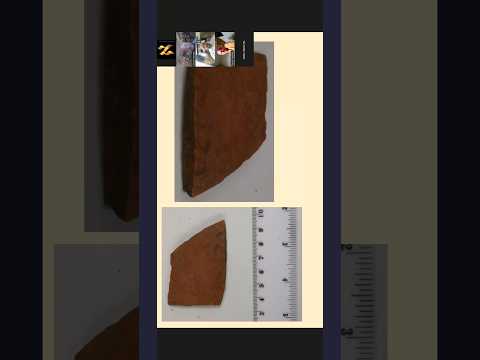
The research concerns a Canaanite inscription discovered during the 2025 excavations at Tel Lachish. The artifact, a fragmentary ceramic jar bearing six surviving letters written in red ink, belongs to an archaeological context dated to the twelfth century BCE.
The inscription preserves the personal name Bʿlšlṭ, whose linguistic structure raises important questions concerning the historical distribution of the Semitic root ŠLṬ.
Traditionally, this root has often been understood as entering the relevant linguistic traditions through Aramaic during the Persian period. Its apparent presence in an earlier Canaanite inscription invites scholars to reconsider aspects of that chronology and the relationship between ancient Northwest Semitic languages.
The discovery is equally important for understanding the development of alphabetic writing. Its relatively standardized Linear Canaanite letter forms and cursive characteristics provide evidence of scribal practices during a formative period in the history of the alphabet.
The peer-reviewed 2026 research on the discovery is available through the published academic article.
Archaeology, Language, and the History of Writing
The Lachish inscription illustrates the importance of combining archaeological context, palaeography, historical linguistics, and epigraphy.
Although the surviving inscription is fragmentary, its interpretation offers valuable evidence for the study of personal names, writing practices, and linguistic continuity in the ancient Levant.
These questions are central to the interdisciplinary mission of the European Hebrew Journal conference, which brings together international specialists in biblical studies, archaeology, Hebrew language, theology, textual criticism, and related disciplines.
Read the earlier EHJ Conference News report on the Lachish inscription for background on the discovery and its scholarly context.
Dr. Vainstub's presentation marked an academically significant opening to the five-day conference, taking place online from 6 to 10 November 2026.
Watch Highlights from the Lecture
Short video highlights from Dr. Vainstub's presentation are now available on the Institute's YouTube and Instagram channels, allowing a wider international audience to discover this important research. These short videos introduce the subject of the lecture and offer a glimpse of the scholarly discussions taking place during EHJ 2026.
THE CONFERENCE IS UNDERWAY — YOU CAN STILL JOIN!
Join the remaining live lectures and receive 12 months of access to recordings of the complete five-day conference.
Student admission requires proof of current student status.
Registration remains open until the conclusion of the conference on 10 November 2026.
Registration supports the European Hebrew Journal, a Diamond Open Access academic journal committed to making scholarly research freely accessible to readers worldwide. Learn more about the European Hebrew Journal and the Institute for Hebrew Language and Literature.