Did Moses Write the Pentateuch? Jeffrey L. Morrow Revisits Isaac La Peyrère and the Origins of Modern Biblical Criticism
By Prof. Dr. Željko Stanojević
Published:
Did Moses Write the Pentateuch? A Seventeenth-Century Challenge Reconsidered
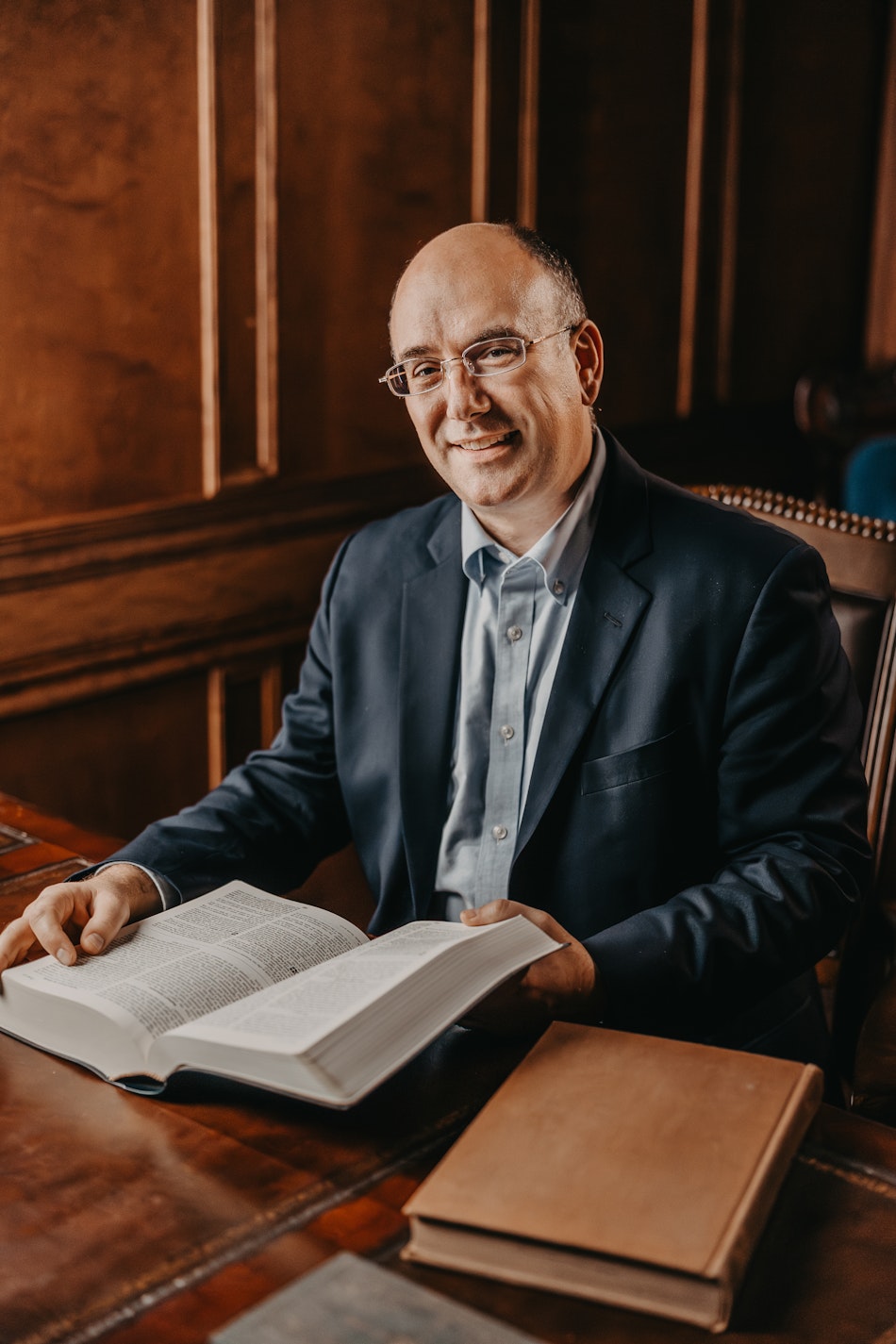
Who wrote the first five books of the Bible? Was Moses their author, as traditionally maintained in Jewish and Christian interpretation, or did the Pentateuch emerge through a more complicated history of composition and transmission? These questions were explored at the European Hebrew Journal International Online Conference on Saturday, 7 November 2026, at 20:00 CET, when Jeffrey L. Morrow, Ph.D., Professor of Theology at Franciscan University of Steubenville and Director of the St. Paul Studies Center at the St. Paul Center for Biblical Theology, delivered “Isaac La Peyrère and the Question of the Mosaic Authorship of the Pentateuch.” Morrow examined a provocative figure in early modern biblical interpretation: French scholar Isaac La Peyrère (c. 1596–1676), whose writings challenged established assumptions about biblical history, human origins, and Torah authorship. The presentation situated these debates within seventeenth-century Europe's intellectual, theological, and political circumstances. Read the official presentation abstract.
Who Was Isaac La Peyrère?
La Peyrère served as secretary to the Prince of Condé and participated in the intellectual and political networks of seventeenth-century France. He became controversial through his theory that human beings existed before the biblical Adam, associated with his 1655 work Praeadamitae, an unconventional interpretation of passages in Paul's Epistle to the Romans.
His arguments raised questions beyond chronology: how Scripture relates to human history, how Genesis should be interpreted, and how biblical narratives relate to religious authority. The pre-Adamite proposal provoked controversy by challenging contemporary Christian understandings of human origins; it is a historical theological argument, not an established account of human origins.
Praeadamitae and Systema Theologicum
Morrow concentrated particularly on La Peyrère's Systema theologicum, published alongside his pre-Adamite writings. Though often remembered for the pre-Adamite hypothesis, La Peyrère's wider biblical interpretation also questioned the traditional attribution of the Pentateuch to Moses. This makes his work significant to the history of biblical criticism.
The issue concerned how to interpret Scripture when historical observations or textual features appeared difficult to reconcile with inherited accounts of authorship. La Peyrère's seventeenth-century argument was not the later documentary hypothesis. His original theological work is available through the Wellcome Collection.
From La Peyrère to Spinoza and Richard Simon
La Peyrère's writings formed part of a wider history of European biblical interpretation. They were known to Baruch Spinoza, while his connection with Richard Simon links him to another formative chapter in critical biblical scholarship. Simon's Histoire critique du Vieux Testament became influential in discussions of textual transmission, scribal activity, and historical study of the Old Testament.
La Peyrère, Hobbes, Spinoza, and Simon held distinct positions, not one shared theory, but their writings participated in debates that transformed biblical interpretation. Morrow examines these connections in The Acid of History.
Biblical Criticism, Theology, and Political Power
A distinctive feature of Morrow's research is attention to the relationship between biblical interpretation and political history. Seventeenth-century Europe experienced conflicts over religious authority, confessional identity, sovereignty, and scriptural interpretation. Biblical criticism developed within this environment rather than in an intellectual vacuum.
He traces how scriptural arguments intersected with authority, governance, and emerging European states, situating critical methods within rather than apart from their social setting.
Jeffrey L. Morrow and the History of Biblical Scholarship
Morrow is Professor of Theology at Franciscan University of Steubenville and Director of the St. Paul Studies Center. His published research addresses biblical theology, historical-critical interpretation, Catholic Modernism, the history of biblical scholarship, and Pentateuchal studies.
His books include Three Skeptics and the Bible, Theology, Politics, and Exegesis, and Murmuring Against Moses, co-authored with John Bergsma. His scholarship links intellectual history and theological interpretation. Further details appear in his St. Paul Center profile.
Why This Debate Still Matters
Questions concerning Mosaic authorship continue to shape discussion of the Torah, biblical inspiration, textual criticism, and the history of interpretation. Understanding early modern challenges to traditional authorship claims helps explain how contemporary scholarly debates developed.
Morrow's presentation showed why La Peyrère's context matters to Pentateuchal research. It was part of the five-day conference organized by the Institute for Hebrew Language and Literature in support of the European Hebrew Journal. The authorship debate involves not only texts, but also Scripture, theology, philosophy, and political authority.