Conference Presentation
From Classical to Late Biblical Hebrew to Qumran Hebrew: Diachronic Change in Numerical Calendrical Constructions
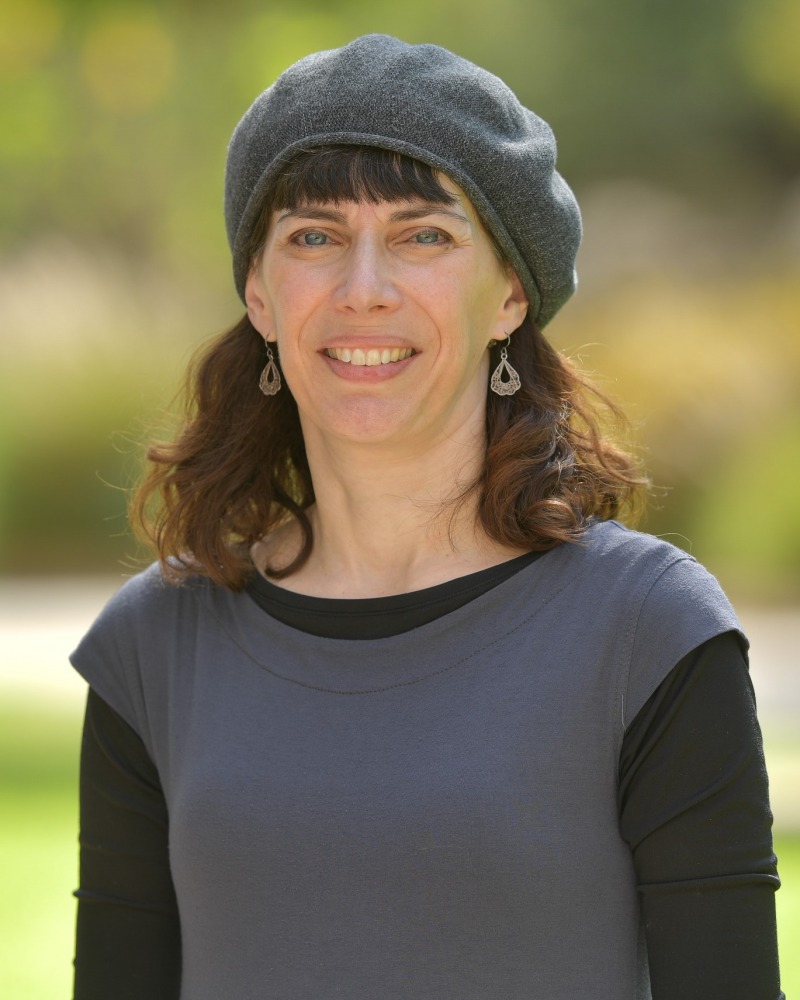
Prof. Adina Moshavi
Professor
Department of Hebrew Language
Faculty of Humanities
The Hebrew University of Jerusalem
Israel
Presentation Date & Time
10 November 2026
12:00 CET (Serbia time)
Conference
New Discoveries and New Directions in Biblical, Hebrew, and Theological Studies
European Hebrew Journal International Online Conference
Format
Live online via Zoom
Sign Up for Conference Updates by Email
By signing up, you will receive:
- • announcements of newly confirmed international speakers
- • newly announced presentation topics
- • important programme updates and conference news
- • Early Bird reminders before ticket prices increase
- • important registration information and deadlines
- • once a month, a carefully selected digest of important new scientific discoveries and research developments in 2026, especially in Biblical Studies, Hebrew, archaeology, ancient history, Jewish Studies, theology, linguistics, manuscripts, and related fields
Thank you for signing up!
Check your email for updates on new speakers, presentation topics, and conference news.
Something went wrong
Please try again or contact us if the problem persists.
Abstract
Calendrical dates in the Bible are generally designated by numerical expressions designating ordinal numbers ('the first day', 'the second month', 'the third year'). Since ordinal numerals in Biblical Hebrew only go up to 10th, dates involving higher numbers such as 15th or 25th were expressed by special constructions featuring cardinal numerals; dates with ordinal numbers under ten could also be expressed by some of these special constructions.
My research has shown that the syntax of calendrical dates is different in Classical Biblical Hebrew and Late Biblical Hebrew, reflecting diachronic linguistic change. In this talk I will survey the syntactic constructions expressing calendrical dates in the successive stages of Biblical Hebrew.
I will then discuss syntactic variation in dates in Qumran Hebrew and show how some calendrical phrases reflect Late Biblical Hebrew syntax, others reflect post-biblical developments also seen in Rabbinic Hebrew, and yet others are an imitation, whether successful or unsuccessful, of Classical Biblical Hebrew syntax. For additional research on Qumran Hebrew and the linguistic world of the Dead Sea Scrolls, explore the Institute's resources on Qumran Hebrew and the linguistic world of the Dead Sea Scrolls.
Keywords
Numerical and Calendrical Expressions across the History of Hebrew
Prof. Adina Moshavi's current research includes the syntax and semantics of Hebrew cardinal and ordinal numerical expressions, with particular attention to diachronic change. Her work explicitly compares numerical calendar expressions in Classical Biblical Hebrew with developments in Late Biblical Hebrew, the Dead Sea Scrolls, and other later Hebrew corpora.
The variation in numerical syntax in the Bible and the Dead Sea Scrolls provides a particularly useful criterion for ranking the tendencies of a text towards continuity with earlier stages of Hebrew, expression of contemporary vernacular norms, or imitation of the classical language, and has yielded new insights regarding the dating of biblical texts. The EHJ presentation title places this problem in a diachronic sequence extending from Classical Biblical Hebrew through Late Biblical Hebrew to Qumran Hebrew.
Academic Profile
Prof. Adina Moshavi is a professor in the Department of Hebrew Language at the Hebrew University of Jerusalem. Her research combines traditional philological study of Biblical Hebrew with modern linguistic theory and methodology.
She began her advanced academic work as a Bible student at the Bernard Revel Graduate School of Yeshiva University and completed a Ph.D. in Semitic Languages and Literature in 2000. From 2001 to 2011 she taught as an adjunct lecturer in the Department of Hebrew Language and Jewish Languages at the Hebrew University of Jerusalem. In 2011 she was appointed Senior Lecturer in the Department of Hebrew Language and Semitic Languages at Bar-Ilan University, where she taught until joining the Hebrew University in 2021.
Her research interests include Biblical Hebrew syntax, pragmatics, discourse analysis, question-response interaction in biblical dialogue, grammaticalization of negative polarity items, lexical semantics, word order, and the syntax and semantics of numerical expressions. She also works on the relationship between philology and biblical interpretation.
Education and Academic Qualifications
Advanced Biblical and Semitic Studies
Bernard Revel Graduate School, Yeshiva University.
2000
Ph.D. in Semitic Languages and Literature.
Academic Positions
2001–2011
Adjunct Lecturer, Department of Hebrew Language and Jewish Languages, The Hebrew University of Jerusalem.
2011–present
Associate Professor, Dept. of Hebrew Language, The Hebrew University of Jerusalem
Research Expertise
- • Biblical Hebrew Syntax
- • Qumran / Dead Sea Scrolls Hebrew
- • Biblical Hebrew Pragmatics
- • Discourse Analysis
- • Question–Response Interaction
- • Word Order
- • Lexical Semantics
- • Negative Polarity Items
- • Hebrew Numerical Expressions
- • Diachronic Hebrew Linguistics
- • Philology and Biblical Interpretation
Selected Publications
Moshavi, Adina.
Word Order in the Biblical Hebrew Finite Clause: A Syntactic and Pragmatic Analysis of Preposing.
Linguistic Studies in Ancient West Semitic 4. Eisenbrauns, 2010.
Rothstein, Susan, and Adina Moshavi.
"Numeral Construct Phrases in Biblical Hebrew: A Theoretical Perspective."
Brill's Journal of Afroasiatic Languages and Linguistics 13.1 (2021): 101–129.
Moshavi, Adina.
"Expressing the Day of the Month in Biblical Hebrew: A Diachronic Perspective."
Journal for Semitics 30.2 (2021).
Moshavi, Adina.
"Is There a Negative Polarity Item Dabar in DSS Hebrew?"
Dead Sea Discoveries 27.3 (2020): 335–350.
Moshavi, Adina.
"Answering Yes/No Questions in Biblical Hebrew Dialogue."
Vetus Testamentum (2020).
Moshavi, Adina, and Tania Notarius, eds.
Advances in Biblical Hebrew Linguistics: Data, Methods, and Analyses.
Eisenbrauns, 2017.
Academic Profiles and Verified Sources
Hebrew University — Department of Hebrew Language
Prof. Adina Moshavi Faculty ProfilePersonal Academic Site
Adina Moshavi — Hebrew UniversityBiography
Academic Biography and CredentialsPublications
Complete Publications ListConference Participation
Prof. Adina Moshavi presents at the European Hebrew Journal International Online Conference 2026 on 10 November 2026 at 12:00 CET, Serbia time, with the presentation "From Classical to Late Biblical Hebrew to Qumran Hebrew: Diachronic Change in Numerical Calendrical Constructions."
Suggested Citation
Moshavi, Adina. "From Classical to Late Biblical Hebrew to Qumran Hebrew: Diachronic Change in Numerical Calendrical Constructions." Presentation at New Discoveries and New Directions in Biblical, Hebrew, and Theological Studies, European Hebrew Journal International Scholarly Online Zoom Conference, 10 November 2026.
Attend Prof. Adina Moshavi's Presentation
Register for the European Hebrew Journal International Online Conference to attend the live presentation and receive twelve months of access to the complete conference recording library.