
Conference Presentation
AI, Statistics, and the Hebrew Bible: Computational Directions in the Study of Ancient Hebrew Texts and Philological Limits of AI
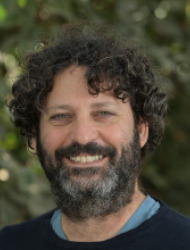
Dr. Barak Sober
Senior Lecturer of Statistics and Data Science and Digital Humanities
Department of Statistics and Data Science
The Hebrew University of Jerusalem
Israel
Presentation Date & Time
Sunday, 8 November 2026
21:00 CET (Serbia time)
Conference
New Discoveries and New Directions in Biblical, Hebrew, and Theological Studies
European Hebrew Journal International Online Conference
Format
Live online via Zoom
Sign Up for Conference Updates by Email
By signing up, you will receive:
- • announcements of newly confirmed international speakers
- • newly announced presentation topics
- • important programme updates and conference news
- • Early Bird reminders before ticket prices increase
- • important registration information and deadlines
- • once a month, a carefully selected digest of important new scientific discoveries and research developments in 2026, especially in Biblical Studies, Hebrew, archaeology, ancient history, Jewish Studies, theology, linguistics, manuscripts, and related fields
Thank you for signing up!
Check your email for updates on new speakers, presentation topics, and conference news.
Something went wrong
Please try again or contact us if the problem persists.
Abstract
Philology has always read ancient texts qualitatively. Much of the recent computational work asks a narrower question: what happens when we count instead? I will follow that question through three scales of evidence from the Hebrew Bible and its world — the names people were given, the spellings scribes chose, and the letter-shapes they drew. Diversity statistics on the Iron Age onomasticon distinguish Israel from Judah and invert the expected relation between capital and periphery. Column-by-column orthographic counts in the Great Isaiah Scroll point to three scribal segments rather than the classical two. Algorithmic analysis of the Tel Arad ostraca identifies at least five distinct hands, bearing on the question of literacy in late-monarchic Judah. But counting is not neutral, and the rest of the talk is about how it misleads. Our own work shows that stylometry readily mistakes theme for style, and proposes ways of separating them — in general, and in the Priestly source, where the very continuity of the sources breaks the obvious statistical test. Finally, in ongoing work on dating an ancient corpus, what looked like a model reading time in the language proved to be reading the proper names in it: so far, no method we have tested recovers chronology from linguistic structure alone. Each result required inventing the control that made it believable, and I will argue that those controls, not the models, are what computation contributes to philology.
About Dr. Barak Sober
Barak Sober, PhD, is Senior Lecturer of Statistics and Data Science and Digital Humanities at the Hebrew University of Jerusalem. His research operates at the intersection of mathematical statistics, machine learning, artificial intelligence, digital humanities, archaeology, ancient Hebrew epigraphy, and the computational analysis of Biblical Hebrew and other ancient texts.
His work applies statistical and computational methods to questions traditionally addressed through philology, archaeology, palaeography, and textual analysis. His research has included computational analysis of Biblical Hebrew, statistical investigation of literary structure in Genesis and Exodus, algorithmic handwriting analysis of ancient Hebrew inscriptions, multispectral and hyperspectral imaging of ostraca, and quantitative investigation of literacy, administration, and social patterns in the kingdoms of Israel and Judah.
Sober's interdisciplinary research has contributed to new approaches for evaluating textual classification and hypothesized literary divisions within the Hebrew Bible. His work with collaborators on the Priestly material in Genesis and Exodus combines statistical modelling and computational classification with traditional philological and biblical scholarship, providing an important methodological bridge between data science and the humanities.
He has also participated in major computational and imaging studies of Iron Age inscriptions from sites and collections associated with Arad, Samaria, Lachish, and other contexts. These projects combine mathematical modelling, computer vision, advanced imaging, archaeology, epigraphy, and historical interpretation.
Before joining the Hebrew University of Jerusalem, Sober was a Phillip Griffiths Assistant Research Professor in the Department of Mathematics at Duke University and worked with the Rhodes Information Initiative. He completed his doctoral work in applied mathematics at Tel Aviv University under Prof. David Levin, while his master's research was jointly supervised by mathematician David Levin and archaeologist Israel Finkelstein.
Education & Academic Background
Ph.D. in Applied Mathematics
Tel Aviv University
Supervisor: Prof. David Levin
Dissertation: Structuring High Dimensional Data: A Moving Least-Squares Projective Approach to Analyze Manifold Data
M.Sc. in Applied Mathematics
Tel Aviv University
Co-supervisors: Prof. David Levin (Mathematics), Prof. Israel Finkelstein (Archaeology and Ancient Near Eastern Civilizations)
Graduated summa cum laude
B.Sc. in Mathematics and Philosophy
Tel Aviv University
Graduated magna cum laude
Research Expertise
Computational Study of the Hebrew Bible
A major interdisciplinary dimension of Dr. Sober's work is the application of statistically rigorous computational methods to Biblical Hebrew and the literary analysis of the Hebrew Bible.
Together with collaborators in biblical studies, archaeology, computer science, and statistics, he has helped develop approaches for testing proposed textual classifications and literary divisions rather than treating computational outputs as self-validating conclusions.
Research on the Priestly material in Genesis and Exodus has examined whether statistically detectable stylistic features support proposed literary distinctions, while subsequent work has investigated how sequentially correlated literary properties can create misleading signals in textual classification.
This research provides an especially relevant background for the conference presentation's broader focus on both the possibilities and the philological limits of AI and statistical approaches to ancient Hebrew texts.
Scripta/Spectra Lab
The Scripta/Spectra Lab at the Hebrew University of Jerusalem develops computational and technological approaches to the study of language and culture in ancient Israel and Judah.
The laboratory focuses particularly on two complementary areas:
Computational Study of Biblical Hebrew
Statistical, computational, and AI models are applied to Biblical Hebrew and other ancient textual corpora. The research includes stylometry, textual classification, and methodological investigation of literary structure in selected texts of the Hebrew Bible.
Hyperspectral Imaging and Ancient Hebrew Inscriptions
Advanced hyperspectral imaging technologies are used to document and analyse ancient inscriptions, including details that may be difficult or impossible to see with the unaided human eye. These methods can improve the reading, preservation, and computational investigation of Iron Age ostraca and other inscribed artefacts.
Research Highlight
Can Statistics Test Biblical Literary Hypotheses?
Sober and his collaborators have developed statistically rigorous approaches for testing proposed textual divisions in the Hebrew Bible. Their work on the Priestly material in Genesis and Exodus combines computational classification with close attention to the underlying textual problem, while more recent research examines how thematic continuity and other sequential textual properties may generate misleading statistical signals.
This methodological concern is particularly important in the age of artificial intelligence: computational methods can reveal patterns that are difficult to detect manually, but statistical separation alone does not automatically establish a philological or historical conclusion.
Selected Publications
Vishne, Ariel, Mitka R. Golub, Eli Piasetzky, Israel Finkelstein, and Barak Sober.
"Diversity Statistics of Onomastic Data Reveal Social Patterns in Hebrew Kingdoms of the Iron Age."
Proceedings of the National Academy of Sciences 122 (2025), e2503850122.
Yoffe, Gideon, Nachum Dershowitz, Ariel Vishne, and Barak Sober.
"Estimating the Influence of Sequentially Correlated Literary Properties in Textual Classification: A Data-Centric Hypothesis-Testing Approach."
Journal of Quantitative Linguistics 32.4 (2025): 313–345.
Vainstub, Daniel, Hoo Goo Kang, Barak Sober, Iris Arad, and Yosef Garfinkel.
"A New Hebrew Ostracon from Lachish."
Jerusalem Journal of Archaeology 8 (2025): 41–50.
Bühler, Axel, Gideon Yoffe, Nachum Dershowitz, Eli Piasetzky, Israel Finkelstein, Thomas Römer, and Barak Sober.
"Exploring the Stylistic Uniqueness of the Priestly Source in Genesis and Exodus Through a Statistical/Computational Lens."
Zeitschrift für die Alttestamentliche Wissenschaft 136 (2024): 165–190.
Faigenbaum-Golovin, Shira, Arie Shaus, and Barak Sober.
"Computational Handwriting Analysis of Ancient Hebrew Inscriptions – A Survey."
IEEE BITS the Information Theory Magazine (2022).
Faigenbaum-Golovin, Shira, Arie Shaus, Barak Sober, Eli Turkel, Eli Piasetzky, and Israel Finkelstein.
"Algorithmic Handwriting Analysis of the Samaria Inscriptions Illuminates Bureaucratic Apparatus in Biblical Israel."
PLOS ONE 15 (2020), e0227452.
Shaus, Arie, Yana Gerber, Shira Faigenbaum-Golovin, Barak Sober, Eli Piasetzky, and Israel Finkelstein.
"Forensic Document Examination and Algorithmic Handwriting Analysis of Judahite Biblical Period Inscriptions Reveal Significant Literacy Level."
PLOS ONE 15 (2020), e0237962.
Faigenbaum-Golovin, Shira, et al.
"Algorithmic Handwriting Analysis of Judah's Military Correspondence Sheds Light on Composition of Biblical Texts."
Proceedings of the National Academy of Sciences 113 (2016): 4664–4669.
Selected Recent Scholarship
2025 — Diversity Statistics of Onomastic Data Reveal Social Patterns in Hebrew Kingdoms of the Iron Age — PNAS
2025 — Estimating the Influence of Sequentially Correlated Literary Properties in Textual Classification — Journal of Quantitative Linguistics
2025 — A New Hebrew Ostracon from Lachish — Jerusalem Journal of Archaeology
2024 — Exploring the Stylistic Uniqueness of the Priestly Source in Genesis and Exodus Through a Statistical/Computational Lens — ZAW
Selected Scholarly Recognition
Dan David Scholarship — 2020
Awarded for contribution to historical research using computational methods.
AMS–Simons Travel Grant — 2020
Academic Profiles
Hebrew University — Department of Statistics and Data Science
View Research ProfileScripta/Spectra Lab
View Lab WebsiteHebrew University — Center for Digital Humanities
View Digital Humanities ProfileHebrew University Research Portal / CRIS
View CRIS ProfileKeywords
The presentation keywords will be announced soon.
Suggested Citation
Sober, Barak. "AI, Statistics, and the Hebrew Bible: Computational Directions in the Study of Ancient Hebrew Texts and Philological Limits of AI." Invited presentation at New Discoveries and New Directions in Biblical, Hebrew, and Theological Studies, European Hebrew Journal International Online Conference, 8 November 2026.
Attend This Presentation
Register for the European Hebrew Journal International Online Conference to attend the live presentation and receive twelve months of access to the complete conference recording library.