Conference Presentation
From Stone to Story: Revisiting the Ossuary of Miriam, Granddaughter of Caiaphas
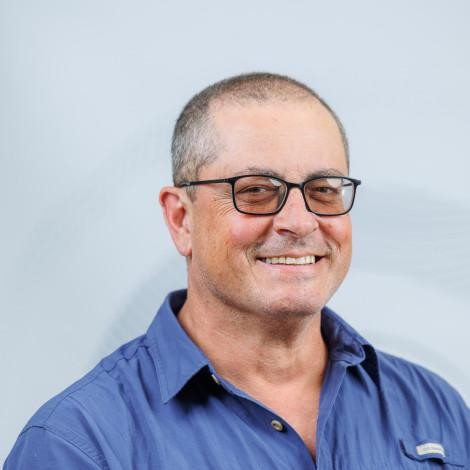
Prof. Boaz Zissu
Martin (Szusz) Department of Land of Israel Studies and Archaeology
Bar-Ilan University
Head, Jeselsohn Epigraphic Center of Jewish History
Israel
ORCID: 0000-0002-3405-2891
Presentation Date & Time
9 November 2026
18:00 CET (Serbia time)
Special Additional Day
Conference
New Discoveries and New Directions in Biblical, Hebrew, and Theological Studies
European Hebrew Journal International Online Conference
Format
Live online via Zoom
Sign Up for Conference Updates by Email
By signing up, you will receive:
- • announcements of newly confirmed international speakers
- • newly announced presentation topics
- • important programme updates and conference news
- • Early Bird reminders before ticket prices increase
- • important registration information and deadlines
- • once a month, a carefully selected digest of important new scientific discoveries and research developments in 2026, especially in Biblical Studies, Hebrew, archaeology, ancient history, Jewish Studies, theology, linguistics, manuscripts, and related fields
Thank you for signing up!
Check your email for updates on new speakers, presentation topics, and conference news.
Something went wrong
Please try again or contact us if the problem persists.
Abstract
From Stone to Story: Revisiting the Ossuary of Miriam, Granddaughter of Caiaphas
Boaz Zissu
Martin (Szusz) Department of Land of Israel Studies and Archaeology
Bar-Ilan University, Israel
Dedicated to the dear memory of Prof. Yuval Goren, colleague, collaborator, and friend.
This lecture revisits a remarkable inscribed limestone ossuary that Yuval Goren and I published together in 2011, and is dedicated to Yuval's memory. Our study brought together archaeology, epigraphy, historical geography, and the scientific analysis of stone and patina—an interdisciplinary approach that characterized Yuval's scholarship and his contribution to archaeological research.
The ossuary, reportedly originating from a burial cave in the ʿElah Valley region, bears a Hebrew inscription identifying the deceased as "Miriam daughter of Yeshua son of Caiaphas, priests of Maʿaziah, from Beth ʿImri." Although its lack of a controlled archaeological provenance necessarily demands caution, the inscription provides an unusual convergence of personal genealogy, priestly affiliation, and geographical origin.
The name Caiaphas connects Miriam with the prominent priestly family known from literary sources and from the famous burial cave discovered in Jerusalem. Of particular significance is the reference to Maʿaziah, the twenty-fourth of the priestly courses associated with service in the Jerusalem Temple. This inscription constitutes the first known epigraphic attestation of that course from the Second Temple period and provides evidence connecting the Caiaphas lineage with it. The concluding designation, Beth ʿImri, raises further questions concerning the family's geographical and economic roots outside Jerusalem and the relationship between Jerusalem's priestly elite and rural Judea. Its possible identification with Beit ʿUmmar in the northern Hebron Hills remains attractive but unproven.
The lecture will also reconsider one of the most challenging aspects of the find: authenticity. Because the ossuary did not derive from a controlled excavation, Yuval undertook a detailed scientific investigation of its stone surface and inscription. Microscopic, petrographic, and ESEM-EDS analyses revealed weathering, biogenic patina, secondary calcitic deposition, and pitting extending both across the surface and within the incised letters. The sequence indicated prolonged natural processes that would be extremely difficult to reproduce artificially, leading us to conclude that the inscription and the patina covering it are ancient.
Fifteen years after its publication, the ossuary remains an exceptional document for the study of priestly families, burial practices, and the connections between Jerusalem and the Judean countryside in the late Second Temple period. Revisiting it also offers an opportunity to reflect on Yuval Goren's distinctive scholarly legacy: his insistence that archaeological interpretation should be tested against the material itself, and his exceptional ability to make stone, sediment, and microscopic traces speak to larger historical questions.
Keywords
Biography
Prof. Boaz Zissu is an archaeologist and historian of the Land of Israel at Bar-Ilan University, where he is a Full Professor in the Martin (Szusz) Department of Land of Israel Studies and Archaeology and Head of the Jeselsohn Epigraphic Center of Jewish History.
His research focuses on the archaeology and historical geography of Judea and Jerusalem, Jewish settlement and burial practices, epigraphy, the Second Temple period, the Bar Kokhba Revolt, ancient roads, hiding complexes, caves, inscriptions, and the material culture of Roman and Byzantine Palestine.
His archaeological work has included extensive field research in Judea and Jerusalem, and his scholarship combines archaeological evidence with epigraphy, historical geography, material analysis, and ancient literary sources.
He has authored and co-authored a substantial body of scholarly research concerning the archaeology and history of Judea and Jewish society in antiquity.
ORCID: 0000-0002-3405-2891
Research Areas
- • Hebrew-Script New Testament Manuscripts
- • Second Temple Period Archaeology
- • Judea and Jerusalem Archaeology
- • Jewish Burial Practices
- • Epigraphy and Hebrew Inscriptions
- • Priestly Families and Courses
- • Historical Geography of the Land of Israel
- • Bar Kokhba Revolt
- • Ancient Roads and Settlement Patterns
- • Caves and Hiding Complexes
- • Roman and Byzantine Palestine
- • Material Culture Analysis
- • Archaeometry and Scientific Analysis
- • Ancient Jewish Society and Culture
Selected Publications & Research
Boaz Zissu and Yuval Goren
The Ossuary of Miriam Daughter of Yeshua Son of Caiaphas, Priests [of] Maaziah from Beth Imri
Israel Exploration Journal 61, no. 1 (2011), 74–95.
The foundational peer-reviewed study of the inscribed ossuary revisited by Prof. Zissu in his EHJ Conference 2026 presentation.
Amos Kloner and Boaz Zissu
The Necropolis of Jerusalem in the Second Temple Period
Interdisciplinary Studies in Ancient Culture and Religion, Vol. 8. Peeters, 2007. 820 pp.
A major archaeological study of Jerusalem's burial landscape during the Second Temple period.
Yosef Spiezer, Yehiel Zelinger and Boaz Zissu
The Rural Hinterland of Jerusalem in the Hasmonean Period
Journal of Ancient Judaism 17, no. 1 (2026), 80–121.
DOI: 10.30965/21967954-bja10086
Recent research integrating archaeological evidence and spatial analysis to reconstruct the Hasmonean-period rural landscape surrounding Jerusalem.
Boaz Zissu and Shemesh Ya'aran
Khirbet Beit ʿAtâb and the Mûghâret Bir el Hasûtah Cave Complex: A Multi-Period Archaeological Site in the Jerusalem Hills
Journal of Ancient History and Archaeology 13, no. 1 (2026), 64–94.
DOI: 10.14795/jaha.13.1.2026.1512
A recent archaeological and speleological investigation of a multi-period site and cave complex in the Jerusalem Hills.
Eric Ottenheijm and Boaz Zissu
A Parable of the Lost Temple? Archaeology, Intertextuality, and Rhetoric in Matt 21:33–46
In: The Power of Parables, 2024, pp. 43–73.
Research bringing archaeological evidence into dialogue with the Jerusalem Temple and the interpretation of Matthew 21.
Boaz Zissu
Interbellum Judea 70–132 CE: An Archaeological Perspective
In: Jews and Christians in the First and Second Centuries: The Interbellum 70–132 CE. Brill, 2018, pp. 19–49.
DOI: 10.1163/9789004352971_003
An archaeological reconstruction of Judea between the destruction of Jerusalem in 70 CE and the Bar Kokhba Revolt.
View Prof. Boaz Zissu's research profile at Bar-Ilan University
Suggested Citation
Zissu, Boaz. "From Stone to Story: Revisiting the Ossuary of Miriam, Granddaughter of Caiaphas." Conference presentation, New Discoveries and New Directions in Biblical, Hebrew, and Theological Studies, European Hebrew Journal International Scholarly Online Conference, 9 November 2026.
Attend Prof. Boaz Zissu's Presentation
Join Prof. Boaz Zissu for a new scholarly reassessment of the inscribed ossuary of Miriam, a remarkable document connecting archaeology, Hebrew epigraphy, priestly history, Second Temple Judaism, and scientific testing of archaeological authenticity.
9 November is the Special Additional Day and is included at no additional charge for all registered conference attendees.