Conference Presentation
The purpose of the War Scroll (1QM) cols. 2-9: Text and Ritual
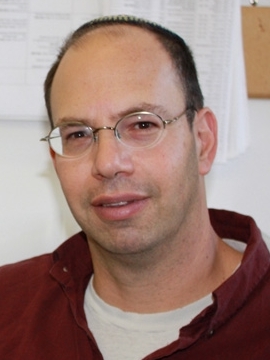
Prof. Eyal Regev
Full Professor
The Martin (Szusz) Department of Land of Israel Studies and Archaeology
Faculty of Jewish Studies, Bar-Ilan University
Israel
Presentation Date & Time
Sunday, 8 November 2026
20:00 CET (Serbia time)
Conference
New Discoveries and New Directions in Biblical, Hebrew, and Theological Studies
European Hebrew Journal International Online Conference
Format
Live online via Zoom
ORCID
0000-0002-0958-8707Sign Up for Conference Updates by Email
By signing up, you will receive:
- • announcements of newly confirmed international speakers
- • newly announced presentation topics
- • important programme updates and conference news
- • Early Bird reminders before ticket prices increase
- • important registration information and deadlines
- • once a month, a carefully selected digest of important new scientific discoveries and research developments in 2026, especially in Biblical Studies, Hebrew, archaeology, ancient history, Jewish Studies, theology, linguistics, manuscripts, and related fields
Thank you for signing up!
Check your email for updates on new speakers, presentation topics, and conference news.
Something went wrong
Please try again or contact us if the problem persists.
Abstract
The scroll of War of the Sons of Light against the War of Darkness (1QM) is a composite text which combines descriptions of eschatological events, military program and liturgical passages. This paper focuses on the ritual aspects of the military equipment and organization in the eschatological war.
Cols. 3–9 of 1QM appear to address military organization and tactics. However, the predominant focus in these sections extends beyond warfare to ceremonial elements such as trumpets, banners and the ritual inscriptions on them. Even the weaponry is described with meticulous attention to aesthetic and nonfunctional details, as one might find in a museum exhibition. A literary-rhetorical analysis of these columns points to ritual aspects crafted to evoke in the reader a perception of the war as a sacred, ritualistic event. This is achieved through repeated motifs, categorization into lists of specific orders, modes of communication and interactions, sacred war symbols and interactions with God. Ritual theory is used to demonstrate the ritualistic markers of the text, shedding light on the authors' aims in portraying the war in this ritualistic manner. This part of the War Scroll is more than a practical military plan, and is rather a textual ritual representation of the eschatological war, in which the army stands on spiritual foundations.
About Prof. Eyal Regev
Eyal Regev is Full Professor in the Martin (Szusz) Department of Land of Israel Studies and Archaeology at Bar-Ilan University, Israel. His research focuses on the social and religious history and social archaeology of the Second Temple period, with particular emphasis on Qumran and the Dead Sea Scrolls, the Hasmoneans and Herod, the Pharisees and Sadducees, the Jerusalem Temple, early Christianity, and the social-scientific study of Second Temple Jewish society.
His scholarship combines literary and historical sources with archaeological evidence in order to reconstruct religious practice, social organization, identity, family life, ritual, material culture, and patterns of individualism and communal belonging in late Second Temple Judaea. His work has addressed ritual baths and purity, burial caves and ossuaries, Qumran sectarianism, Herodian and Hasmonean palaces, Masada, Josephus, and the role of the Jerusalem Temple in early Christianity.
Regev has also held senior academic leadership positions at Bar-Ilan University, including Head of the Department of Land of Israel Studies and Archaeology and Head of Olamot – The School of Jewish Studies and Israeli Culture. He conducted postdoctoral research at Harvard University's Center for Jewish Studies as a Fulbright Scholar.
Education & Academic Background
Doctoral Research
Ph.D. — Land of Israel Studies
Bar-Ilan University
Dissertation: The Sadducean Halakhah and the Sadducees' Influence on Social and Religious Life
Supervisor: Prof. Joshua Schwartz
Undergraduate Studies
B.A. — Jewish History
Bar-Ilan University
Postdoctoral Research
Fulbright Scholarship
Center for Jewish Studies, Harvard University
Research project: Cult, Ritual, and the Social Order in the Land of Israel during the Hasmonean and Herodian Periods
Research Expertise — Prof. Eyal Regev
- • Second Temple Judaism
- • Second Temple History and Archaeology
- • Qumran
- • Dead Sea Scrolls
- • Social Archaeology
- • Social and Religious History
- • Hasmoneans
- • Herod the Great
- • Pharisees and Sadducees
- • Jewish Sects
- • Jerusalem Temple
- • Early Christianity
- • Jewish Ritual and Purity
- • Ritual Baths / Miqva'ot
- • Burial Practices and Ossuaries
- • Masada
- • Josephus
- • Jewish Identity
- • Material Culture
- • Religion and Society in Ancient Judaea
Selected Books and Publications — Prof. Eyal Regev
Regev, Eyal.
The Social Archaeology of Late Second Temple Judaea: From Purity, Burial, and Art, to Qumran, Herod, and Masada.
Routledge, 2023.
Regev, Eyal.
The Temple in Early Christianity: Experiencing the Sacred.
Anchor Yale Bible Reference Library. Yale University Press, 2019.
Regev, Eyal.
The Hasmoneans: Ideology, Archaeology, Identity.
Vandenhoeck & Ruprecht, 2013.
Safrai, Ze'ev, and Eyal Regev.
The Land of Israel during the Second Temple, Mishnah and Talmud Periods.
Karta, Jerusalem, 2011. Hebrew.
Regev, Eyal.
Sectarianism in Qumran: A Cross-Cultural Perspective.
De Gruyter, 2007.
Regev, Eyal.
The Sadducees and Their Halakhah: Religion and Society in the Second Temple Period.
Yad Izhak Ben-Zvi, 2005. Hebrew.
Selected Recent Scholarship
Regev, Eyal.
"Trumpets and Epitaphs: The War Scroll cols. 3–9 in Ritual Perspective."
Dead Sea Discoveries 32.2 (2025): 203–230.
Regev, Eyal.
"The Wilderness, Damascus, and the Land: Notions of Place in Sectarian Community Building."
Studies on the Texts of the Desert of Judah 147. Brill, 2025, pp. 281–298.
Regev, Eyal.
"The Differences between Josephus' Temple Descriptions in War and Antiquities: A Literary-Spatial Analysis."
Brill, 2025, pp. 61–77.
Regev, Eyal.
"The Village People: Social Aspects of Rural Settlements—Comments on Method and Theory."
Atiqot 115 (2024): 1–22.
Second Temple Society Through Texts and Archaeology
Professor Regev's current scholarship combines archaeological, textual, social-scientific, and ritual approaches to reconstruct the society and religious culture of late Second Temple Judaea. Recent research includes the Qumran War Scroll, sectarian concepts of space and community, Josephus' descriptions of the Jerusalem Temple, and the social organization of ancient settlements.
Academic Profiles
Bar-Ilan University — Official Research Profile
View Research ProfileBar-Ilan University — Department Profile
View Department ProfileAcademia.edu
View Academia.edu ProfileKeywords
The presentation keywords will be announced soon.
Suggested Citation
Regev, Eyal. "The purpose of the War Scroll (1QM) cols. 2-9: Text and Ritual." Invited presentation at New Discoveries and New Directions in Biblical, Hebrew, and Theological Studies, European Hebrew Journal International Online Conference, 8 November 2026.
Attend Prof. Eyal Regev's Presentation
Register for the European Hebrew Journal International Online Conference to attend the live presentation and receive twelve months of access to the complete conference recording library.